Local
13 GSCS middle school students named 2026 REACH Georgia Scholars
A Roundtable is a way to meet new people and discuss this article in person at a local coffee shop or other venue.
Roundtables are designed for groups of four, with a shared subject and room for everyone to speak. Come for discussion, with no dating expectation.
Source: Griffin Daily News
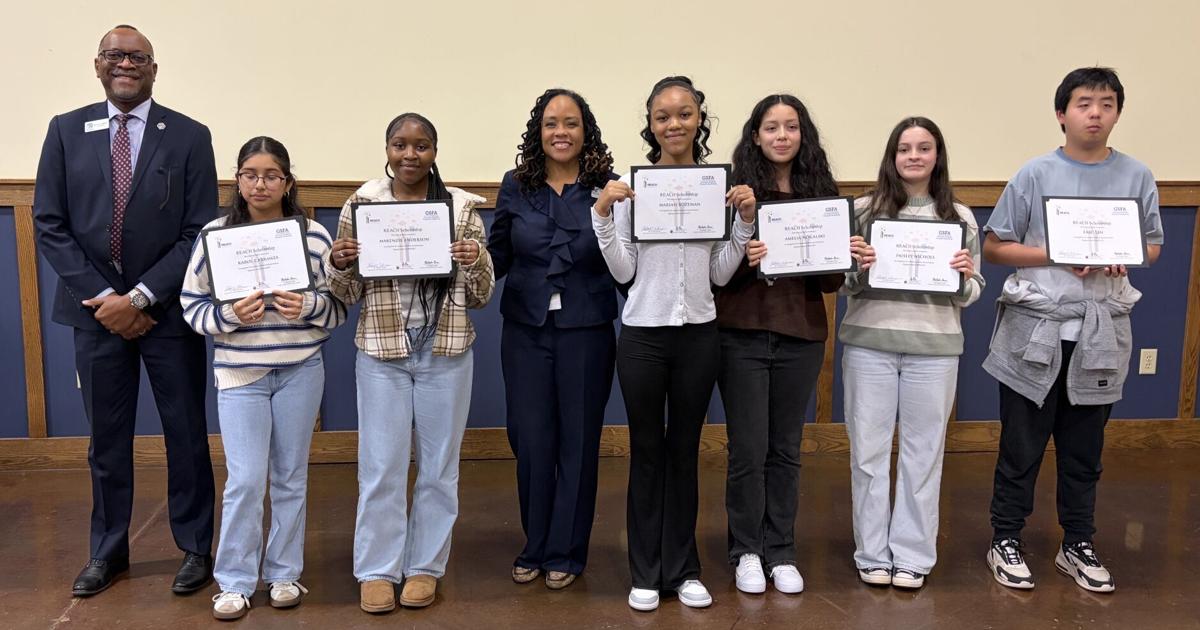
GRIFFIN — During a special signing day ceremony, 13 Griffin-Spalding County School System (GSCS) eighth-grade students were named recipients of $10,000 REACH Georgia Scholarships. The scholarships were presented during a luncheon sponsored by the Kiwanis Club of Griffin on Wednesday, Nov. 11.REACH (Realizing Educational Achievement Can Happen) Georgia’s mission is to ensure that Georgia’s low income, academically promising students have the academic, social, and financial support needed to graduate from high school, access college and achieve postsecondary success.REACH Georgia scholars are selected in middle school and sign a contract along with their parent/guardian to maintain a 2.5 GPA, remain crime, drug and behavior issue free and meet with a volunteer mentor and academic coach until they graduate from high school. Each scholar who completes all program requirements will receive the $10,000 that was earmarked to him/her in the eighth grade.
This excerpt comes from the named source. Read the original for the full reporting.
Read the original at Griffin Daily News


