Local
A Sense of Belonging
A Roundtable is a way to meet new people and discuss this article in person at a local coffee shop or other venue.
Roundtables are designed for groups of four, with a shared subject and room for everyone to speak. Come for discussion, with no dating expectation.
Source: Flathead Beacon
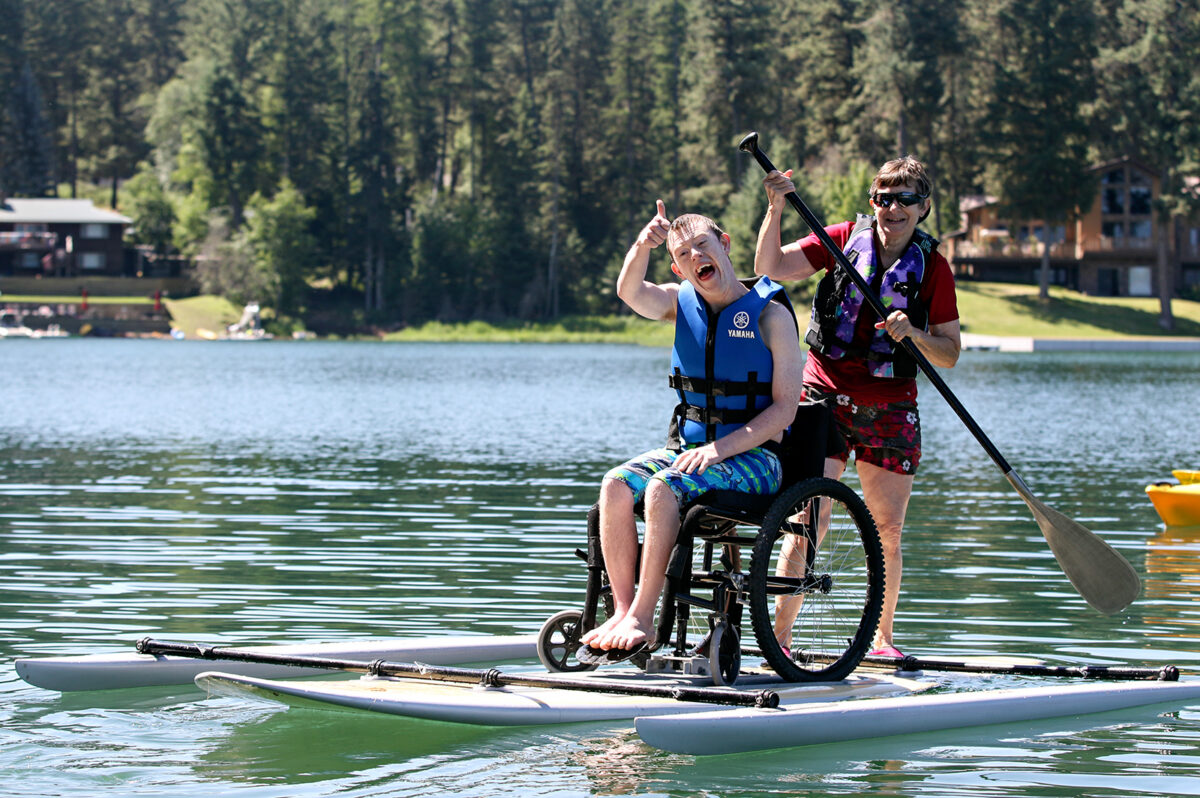
Five years before the landmark Americans with Disabilities Act (ADA) was signed into law in 1990, a group of Flathead Valley residents unified over a shared vision: “making outdoor recreation and public spaces more accessible to people with disabilities.” That vision manifested into the nonprofit, DREAM Adaptive Recreation — a staple in the valley and outdoor adaptive recreation for more than 40 years. One of DREAM’s earliest initiatives was collaborating with Glacier National Park to improve accessibility along the iconic Trail of the Cedars, in addition to developing an accessible trail at Woodland Park in Kalispell and creating a statewide accessibility guide for tourism businesses. “Our founders were very much focused on access projects,” Julie Tickle, who has been DREAM’s executive director since 2018, said. “It kind of stemmed from our founder running a tour guide company and having a woman show up with a mobility device back in the ‘80s.
This excerpt comes from the named source. Read the original for the full reporting.
Read the original at Flathead Beacon


