Local
A telescope 2,450 meters beneath the Mediterranean challenges Einstein: whether spacetime is continuous remains unknown
A Roundtable is a way to meet new people and discuss this article in person at a local coffee shop or other venue.
Roundtables are designed for groups of four, with a shared subject and room for everyone to speak. Come for discussion, with no dating expectation.
Source: Meteored United States
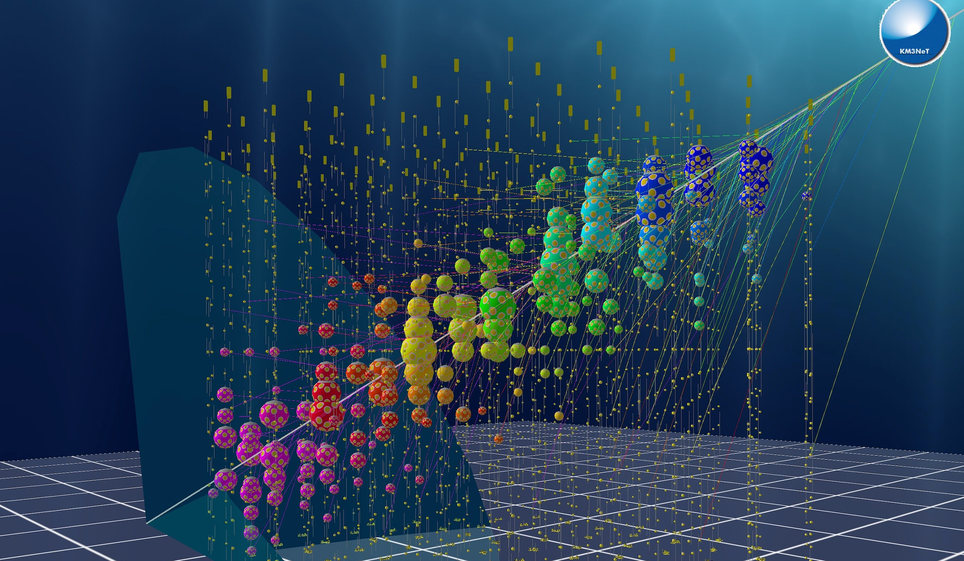
At 2,450 meters beneath the Mediterranean Sea, the KM3NeT/ORCA telescope analyzed thousands of neutrinos without detecting any anomalies, but established new limits on theories that challenge Einstein’s theory of relativity. More than 100 years after its publication, scientists continue to reflect on and conduct experiments to test all the implications of Einstein's General Theory of Relativity. The latest experiment, chronologically speaking, was conducted on the Mediterranean seabed using the properties of neutrinos. This time, Einstein passed the test once again! Neutrinos, among the most elusive particles in the Universe Neutrinos are elementary particles that are almost impossible to capture. Their extremely small mass, at least a million times smaller than that of an electron, and their lack of electric charge allow them to travel enormous cosmic distances virtually unhindered.
This excerpt comes from the named source. Read the original for the full reporting.
Read the original at Meteored United States