Local
After decades leading the Rochester Public Library, Audrey Betcher is replicating its tutoring program
A Roundtable is a way to meet new people and discuss this article in person at a local coffee shop or other venue.
Roundtables are designed for groups of four, with a shared subject and room for everyone to speak. Come for discussion, with no dating expectation.
Source: Post-Bulletin
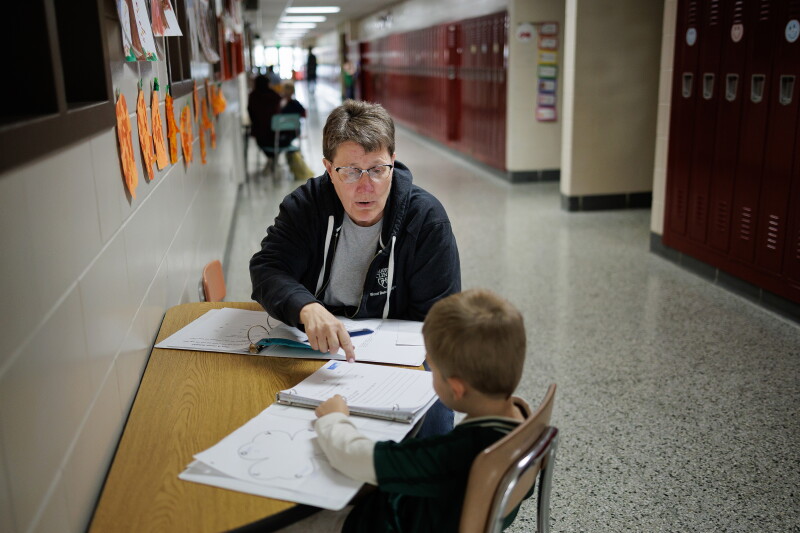
STEWARTVILLE, Minn. — On a recent Wednesday morning, Audrey Betcher was sitting at a child-sized desk in the hallway of Bonner Elementary, helping a student practice spelling. A workbook was spread out in front of them as they discussed vowels and why a word like “spry” would be spelled with a “y” instead of an “i.” Then they got onto the similar-sounding word “sty,” which made Betcher ask her student if he knew what that meant. “Has your mom ever said your room looks like a pigsty?” she said. “Nooo,” he responded. “I’ve heard that before,” Betcher responded while laughing with the student. Betcher has been spending a lot of time at the Stewartville school lately, and she’s been trying to recruit others to join her as well. After retiring from a two-decade career as the director of the Rochester Public Library, she’s turned her attention to tutoring. And she’s using a lot of the skills she learned from the library while she does.
This excerpt comes from the named source. Read the original for the full reporting.
Read the original at Post-Bulletin


