Local
All things local at The Local
A Roundtable is a way to meet new people and discuss this article in person at a local coffee shop or other venue.
Roundtables are designed for groups of four, with a shared subject and room for everyone to speak. Come for discussion, with no dating expectation.
Source: Lakeville Journal
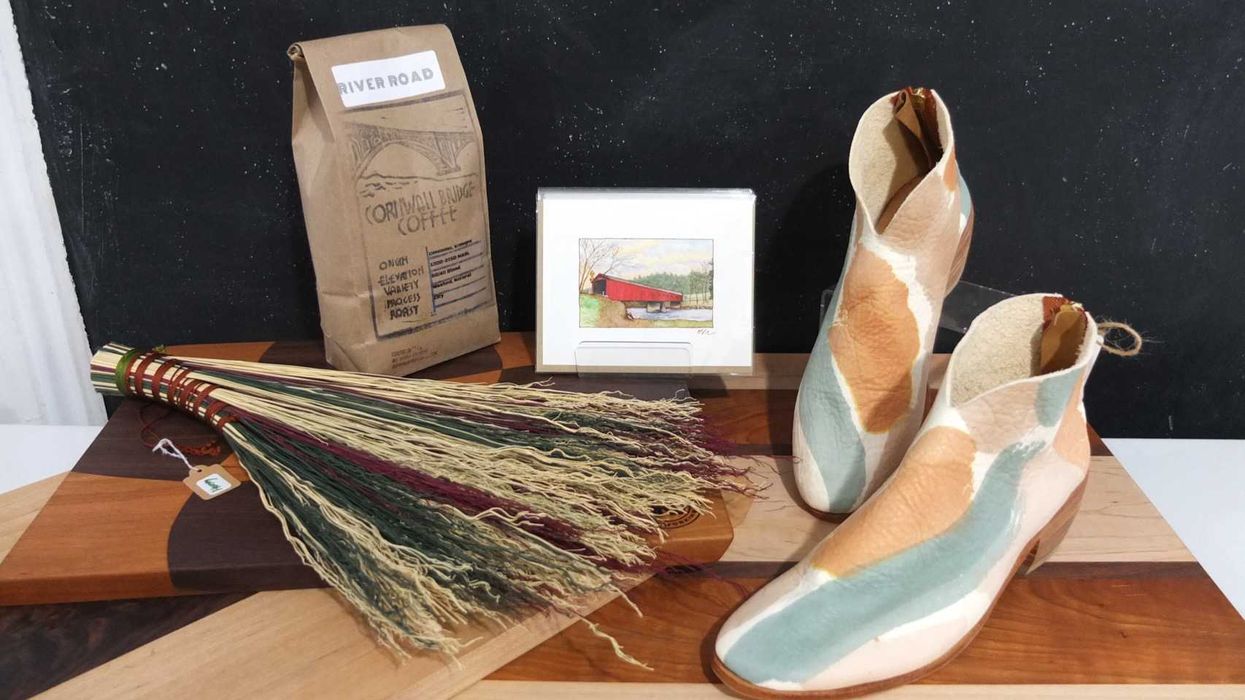
In the heart of West Cornwall, up the hill from the covered bridge and right by the train tracks, sits The Local, a beacon of the community filled with locally made goods and crafts. The Local is a nonprofit shop created to showcase the craftsmanship of the area. Owned by the Hughes Memorial Union, whose goal is to create shared spaces for the Cornwall community, the shop is run by the ever-tenacious and perpetually welcoming Libby Mitchell, who seems to have personal relationships with everyone who contributes. The Local invites all kinds of craftspeople and creators who live or work in the Northwest Corner to contribute whatever they happen to make. The crafts are complemented by a wide variety of ingredients from local farmers and producers and a scrumptious array of prepared foods from chefs, bakers and cottage kitchen cooks with something special to share. Since the store is only open on Fridays and Saturdays, those prepared foods are always fresh and always delicious.
This excerpt comes from the named source. Read the original for the full reporting.
Read the original at Lakeville Journal


