Local
ANC-International publishes updated paper on Artsakh conflict
A Roundtable is a way to meet new people and discuss this article in person at a local coffee shop or other venue.
Roundtables are designed for groups of four, with a shared subject and room for everyone to speak. Come for discussion, with no dating expectation.
Source: Armenian Weekly
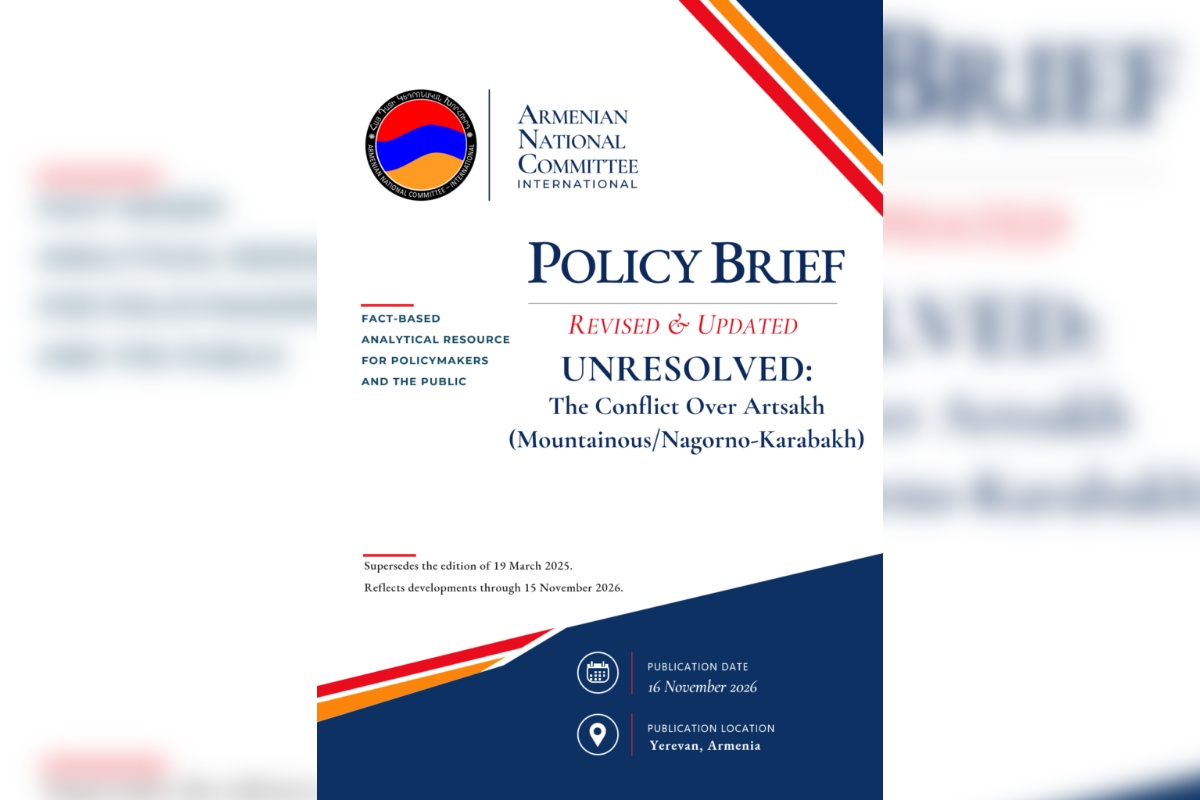
The Armenian National Committee-International (ANC-International) published an updated edition of its advocacy paper “UNRESOLVED: The Conflict Over Artsakh (Mountainous/Nagorno-Karabakh).” The new edition revises the paper of March 19, 2025, and documents what has happened to Artsakh and its people since then. Three years after Azerbaijan’s blockade and military offensive forced more than 100,000 Armenians from their homeland, the paper concludes that the conflict remains unresolved. Military force changed who controls the territory. It did not settle the rights of the people who lived there. What the update finds: Recognition without guarantees. In Prague on Oct. 6, 2022, and explicitly in May 2023, the Armenian government recognized Nagorno-Karabakh as part of Azerbaijan without any agreed guarantee for its people. The agreement initialed in Washington on Aug. 8, 2025, is silent on their right of return, security, property and heritage, and on the Armenian hostages.
This excerpt comes from the named source. Read the original for the full reporting.
Read the original at Armenian Weekly