Local
As Americans gather for Thanksgiving, a centuries-old Sikh tradition offers an expansive vision of hospitality
A Roundtable is a way to meet new people and discuss this article in person at a local coffee shop or other venue.
Roundtables are designed for groups of four, with a shared subject and room for everyone to speak. Come for discussion, with no dating expectation.
Source: The Conversation
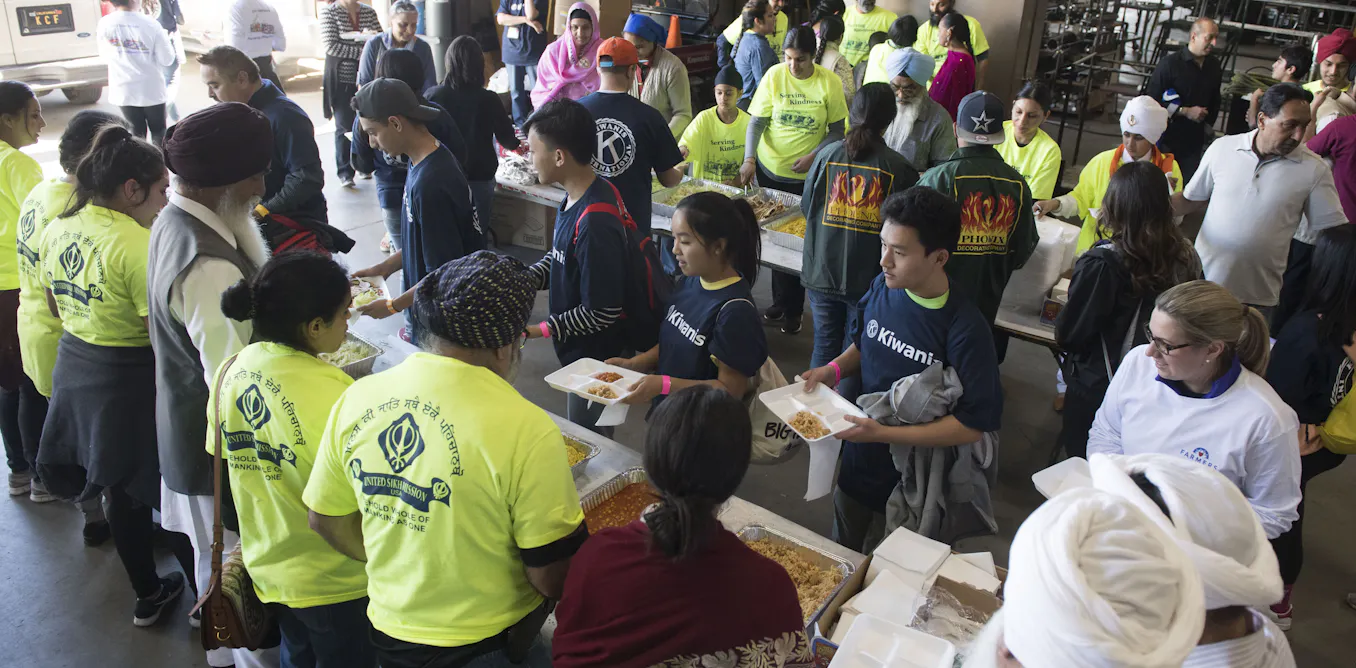
On Sundays at Gurdwara Guru Nanaksar in Chapin, South Carolina, diners sit in rows on the floor while volunteers walk along each row carrying pots and trays of food. They pause to offer each person a spoonful of dal, a dish made with lentils, or a serving of vegetables. When the roti – a kind of flatbread – comes around, diners hold out both hands, palms up. A volunteer places the bread directly into their hands. This is “langar,” the free communal meal served at Sikh houses of worship around the world. Sikh houses of worship are known as “gurdwaras,” from Punjabi for “doorway to the Guru.” Sharing langar inside the gurdwara requires no profession of faith. In the United States, many people spend the weeks before Thanksgiving deciding whom to invite and how much food to make. This year on Nov. 24, two days before Thanksgiving, many Sikhs will celebrate Guru Nanak Gurpurab, which marks the birth of Guru Nanak, the founder of the Sikh faith.
This excerpt comes from the named source. Read the original for the full reporting.
Read the original at The Conversation


