Local
At Nuremberg, women helped make history. Then history forgot them.
Meet in Common connects news with real conversations. Use ThinkMatch to arrange a Roundtable and meet people to discuss this story.
Roundtables are designed for groups of four, with a shared subject and room for everyone to speak. Come for discussion, with no dating expectation.
Source: jewishaz.com
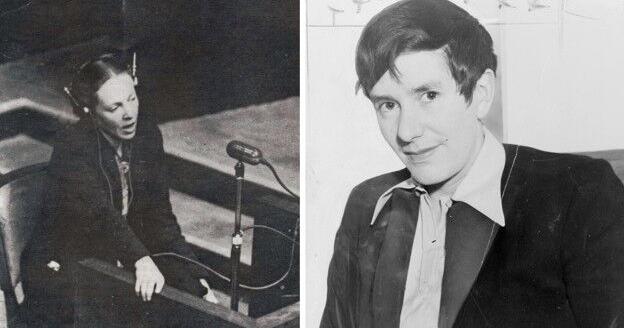
Marie-Claude Vaillant-Couturier. left, testifies about her ordeal in the concentration camps Ravensbrück and Auschwitz at the International Military Tribunals in Nuremberg, 1946. Erika Mann, at right, returned to Germany to cover the Nuremberg trials after fleeing the country in 1933. Courtesy of National Archives, College Park, Maryland; Library of Congress. New York World-Telegram & Sun Collection When I began writing “The Nuremberg Women,” I thought I was writing about a trial. The deeper I went, the more I realized I was writing about hope — the bravest kind of hope: the belief that even after humanity has done its very worst, we can still choose truth over lies, law over vengeance and civilization over barbarism.Eighty years ago this fall, the judges of the International Military Tribunal read out their verdicts to the men in the dock at Nuremberg on Oct.
This excerpt comes from the named source. Read the original for the full reporting.
Read the original at jewishaz.com