Local
Blackhawks claim faceoff specialist Luke Glendening off waivers
A Roundtable is a way to meet new people and discuss this article in person at a local coffee shop or other venue.
Roundtables are designed for groups of four, with a shared subject and room for everyone to speak. Come for discussion, with no dating expectation.
Source: Chicago Sun-Times
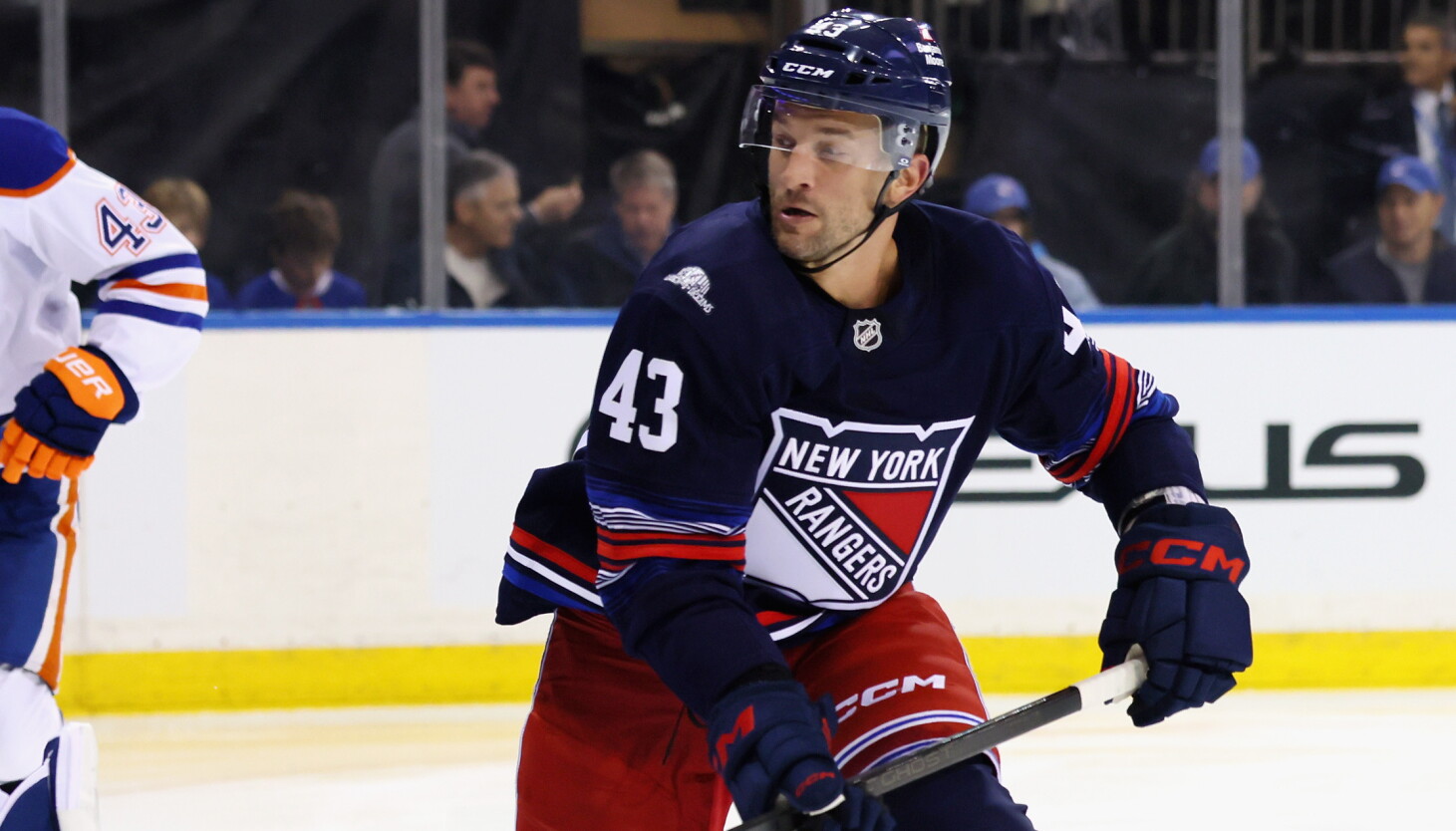
VANCOUVER, British Columbia — The Blackhawks finally found a guy who can win faceoffs. They claimed veteran center Luke Glendening off waivers from the Rangers on Sunday, adding to their forward depth in the wake of Connor Bedard's surgery and Anton Frondell's injury. Glendening will join the Hawks for practice Tuesday in Seattle, coach Jeff Blashill said. Frondell's injury isn't believed to be major, but he didn't play Sunday against the Canucks, which forced the Hawks to call up AHL center Dominic Toninato and send down winger Dillon Boucher. Glendening, 37, is at the point in his career where his impact beyond winning faceoffs and dishing out hits is quite limited. He appeared in only four games for the Rangers this season, averaging barely six minutes of ice time. But in 938 career games, during which he has taken 10,584 faceoffs, the Michigan native has a stellar 55.7% win percentage, making him one of the best draw-takers of his generation.
This excerpt comes from the named source. Read the original for the full reporting.
Read the original at Chicago Sun-Times


