Local
Breaking down the Minnesota high school football state semifinals
A Roundtable is a way to meet new people and discuss this article in person at a local coffee shop or other venue.
Roundtables are designed for groups of four, with a shared subject and room for everyone to speak. Come for discussion, with no dating expectation.
Source: Post-Bulletin
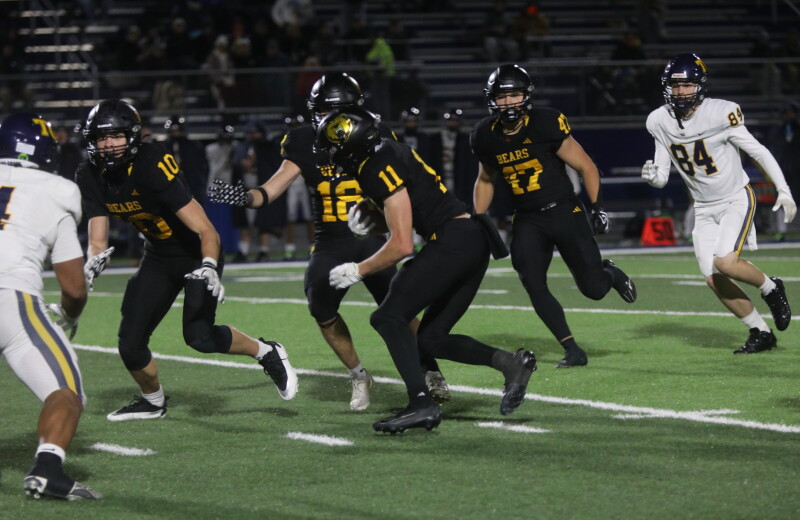
U.S. Bank Stadium will be the hub of Minnesota high school football this weekend, as 14 state semifinal games are played at the home of the Minnesota Vikings over three days. Here’s a look at the games involving local teams, as well as a glance at the other 12: Class 4A Who: No. 1-South Byron (10-1) vs. No. 3-North Fergus Falls (8-3) When: 11:30 a.m., Friday How to watch: Streaming on NSPN.TV/MSHSL About Byron: The No. 2-ranked Bears have been a wrecking machine since their lone loss, a 37-14 setback against Orono in Week 2. … Since then, Byron hasn’t allowed more than 14 points in a game and it has averaged 45.9 ppg. … The Bears are led by one of the top QBs in program history, Eli Rodemeyer. Among his top targets are tight end Keaton Hansen, and receivers Ben Frigaard and Beau Nicklay. … The ground game goes through senior and Minnesota State University, Mankato, commit Jordan Heimer. … Byron is at state for the sixth time in program history and third in the past four years.
This excerpt comes from the named source. Read the original for the full reporting.
Read the original at Post-Bulletin


