Local
Bygones: Duluthians could see photos of their homes' heat loss in 1976
A Roundtable is a way to meet new people and discuss this article in person at a local coffee shop or other venue.
Roundtables are designed for groups of four, with a shared subject and room for everyone to speak. Come for discussion, with no dating expectation.
Source: Duluth News Tribune
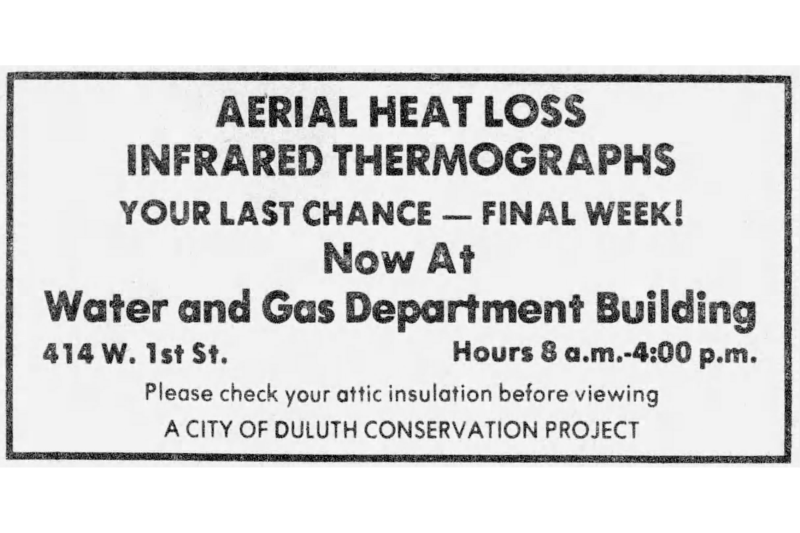
News-Tribune, Nov. 19, 1926 Duluth youngsters are planning a raid on their mothers’ kitchens to obtain “tickets” for the Thanksgiving party to be given by the News Tribune and Astor Theater. The tickets consist of potatoes, fruits, vegetables or canned goods to be distributed to the poor. The largest potato will win a $5 prize, and the movie will be “Ransom’s Folly.” News-Tribune, Nov. 19, 1956 Five Minnesota men were asphyxiated by carbon monoxide in their homemade plywood camp trailer north of Lutsen, another hunter died of gunshot wounds in a Brainerd hospital, and another was shot to death in Barron County, Wisconsin. Five more in Wisconsin and two in Minnesota were wounded. A search is underway for a missing hunter in the Mille Lacs area. News-Tribune, Nov. 19, 1976 All civic, commercial, industrial and residential buildings in Duluth will be examined for heat loss with aerial infrared photographs, also known as thermographs, Mayor Robert Beaudin said.
This excerpt comes from the named source. Read the original for the full reporting.
Read the original at Duluth News Tribune