Local
Canada’s former deputy Prime Minister describes U.S. relationship, navigating foreign policy
Meet in Common connects news with real conversations. Use ThinkMatch to arrange a Roundtable and meet people to discuss this story.
Source: The Stanford Daily
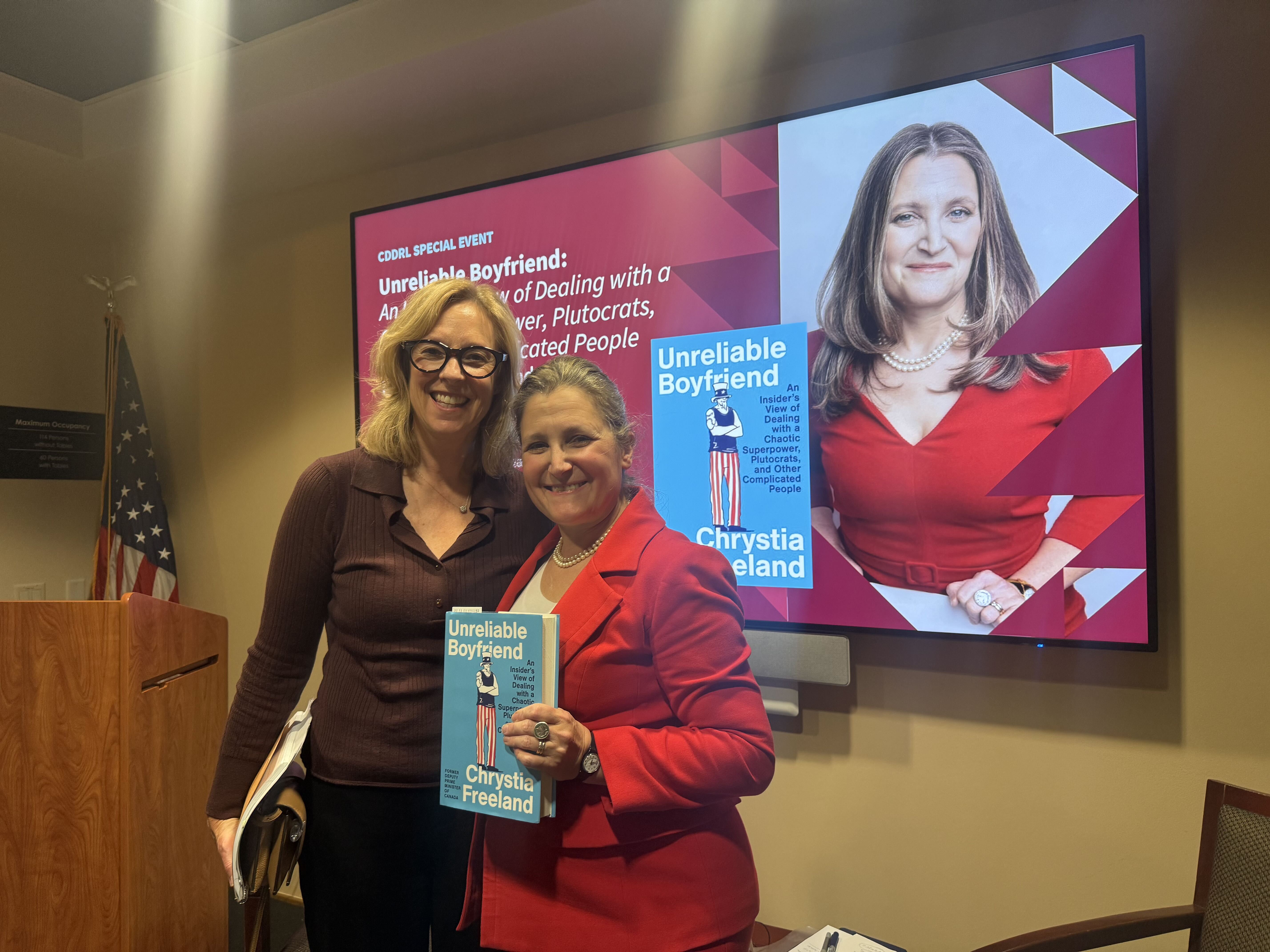
Former Deputy Prime Minister of Canada Chrystia Freeland opened up about betrayal, alliances and making hard choices while in office at Encina Hall this Monday. At the talk hosted by Stanford’s Center on Democracy, Development and the Rule of Law (CCDRL), Freeland discussed her new book, “Unreliable Boyfriend: An Insider’s View of Dealing with a Chaotic Superpower, Plutocrats, and Other Complicated People,” which describes the U.S.-Canada relationship from the perspective of a Canadian diplomat. She also recounted her experience in Justin Trudeau’s government and offered perspective on international political economy and North American politics. Without preface, Freeland macaronically responded to her first question of the event in fluent French, before quickly changing back to English. “Canadians are feeling more Canadian than at any time in my lifetime,” she said.
This excerpt comes from the named source. Read the original for the full reporting.
Read the original at The Stanford Daily