Local
Cancer research leader speaks at 10th anniversary of Wittliff Lecture Series
A Roundtable is a way to meet new people and discuss this article in person at a local coffee shop or other venue.
Roundtables are designed for groups of four, with a shared subject and room for everyone to speak. Come for discussion, with no dating expectation.
Source: sanmarcosrecord.com
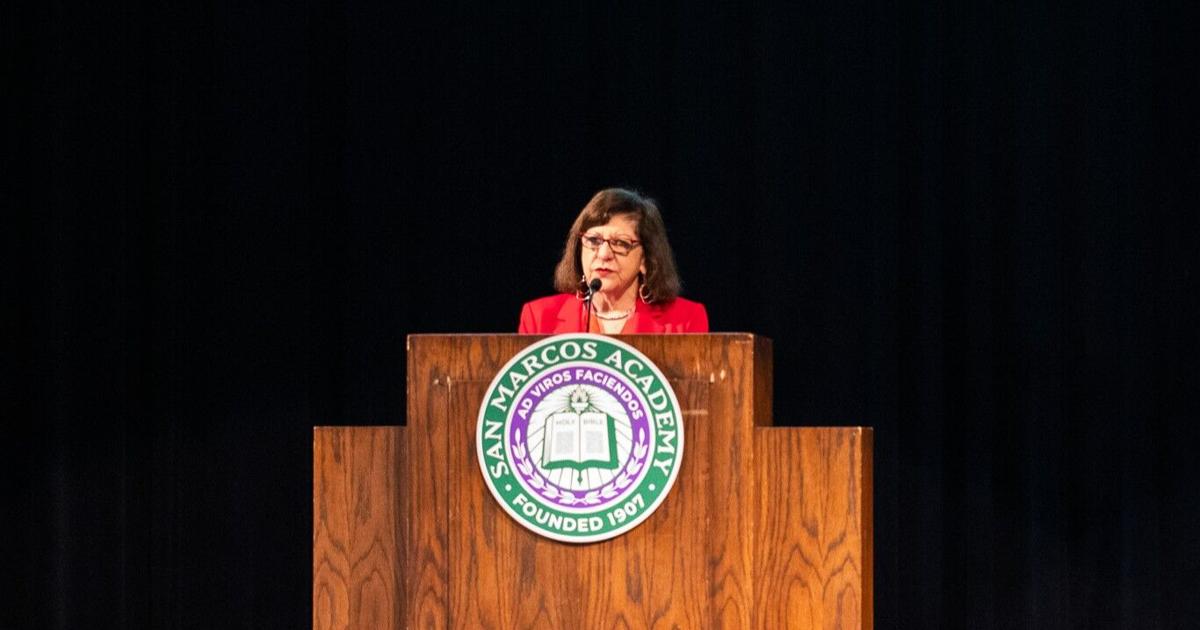
Margaret Foti, CEO of the American Association for Cancer Research, addresses San Marcos Academy students during the 10th anniversary of the Wittliff Lecture Series on Nov. 11. Submitted photo Margaret Foti, chief executive officer of the American Association for Cancer Research, encouraged San Marcos Academy students to consider their role in future scientific discoveries during the 10th anniversary of the Wittliff Lecture Series on Wednesday, Nov. 11.“The next big discovery could be your ideas and your input,” Foti told students, according to notes from the presentation.Speaking about pathways into science, technology, engineering and mathematics (STEM), Foti encouraged students to challenge themselves academically, seek guidance from mentors and ask for help early. She emphasized that scientific progress depends on different kinds of innovative thinking and people willing to cross boundaries, adapt and work together.Her advice extended beyond the laboratory.
This excerpt comes from the named source. Read the original for the full reporting.
Read the original at sanmarcosrecord.com



