Local
CAPITAL IDEAS: How a step-up in basis affects inherited assets
A Roundtable is a way to meet new people and discuss this article in person at a local coffee shop or other venue.
Roundtables are designed for groups of four, with a shared subject and room for everyone to speak. Come for discussion, with no dating expectation.
Source: The Berkshire Edge
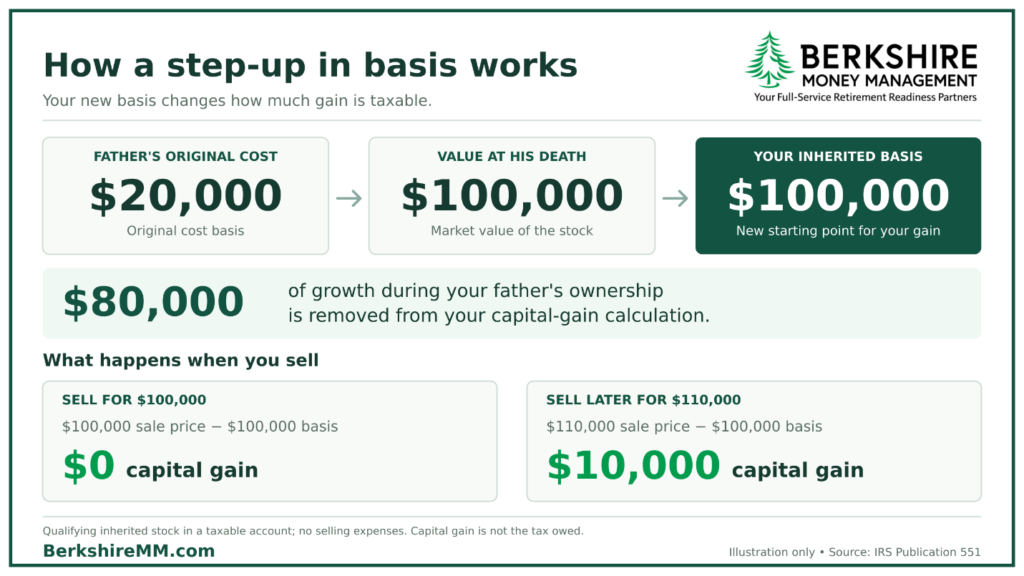
Quick Summary An inheritance can erase decades of taxable gains. A “step-up in basis” generally resets an inherited asset’s cost basis to its market value when the owner dies. Future appreciation can still be taxable. Simply inheriting or keeping an inherited asset generally does not trigger federal income tax. Giving assets away during life can produce a different result. Recipients generally take over the giver’s existing basis. Trust provisions and estate inclusion can also affect whether assets qualify for a basis adjustment. Coordinate investment decisions with estate planning. Review what assets originally cost, their current values, and whether you intend to sell, gift, or leave them to heirs. Inherited assets can also receive a lower basis if their value falls. Tax savings matter, but they should not dictate keeping an investment or property that no longer fits your family’s needs. What is a step-up in basis anyway?
This excerpt comes from the named source. Read the original for the full reporting.
Read the original at The Berkshire Edge