Local
Career center students learn process of 3D concrete printing
A Roundtable is a way to meet new people and discuss this article in person at a local coffee shop or other venue.
Roundtables are designed for groups of four, with a shared subject and room for everyone to speak. Come for discussion, with no dating expectation.
Source: The Vindicator
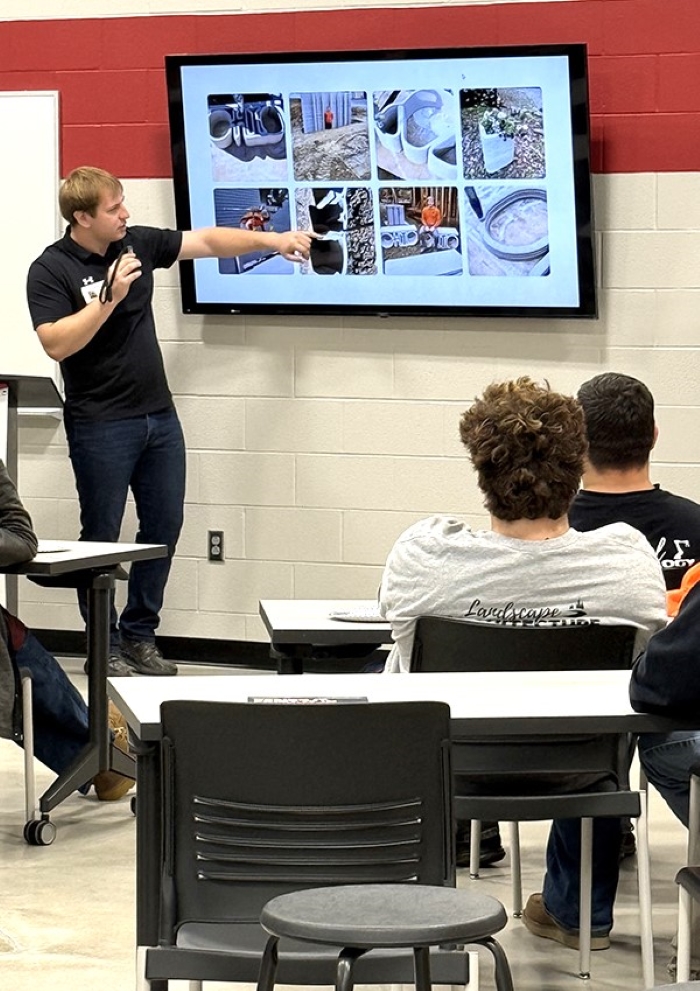
A Mahoning Valley business brought 3D concrete printing to Trumbull Career & Technical Center on Wednesday, giving students a hands-on look at an emerging technology in construction. The interactive showcase is part of a student design competition that challenges TCTC students to create an original piece to be printed in concrete. Tate Wallen, who leads design and production for HSH 3D Concrete Printing in Lisbon, walked students through the full process. A design starts as a digital 3D model, HSH’s in-house software slices it into layers, and the printer builds the piece in concrete one pass at a time. Through a slide show and images, he showed students how the technology is used on real projects. “When students see a design go from a screen to a finished piece of concrete, it clicks,” Wallen said. “This is technology they can build a career around, right here in the Valley.” Now students are putting what they learned to work.
This excerpt comes from the named source. Read the original for the full reporting.
Read the original at The Vindicator