Local
【CDT报告汇】研究访谈14名在日人士:中国跨国镇压从监视骚扰到高校自我审查,恐惧渗透日常生活(外二篇)
Meet in Common connects news with real conversations. Use ThinkMatch to arrange a Roundtable and meet people to discuss this story.
Source: China Digital Times
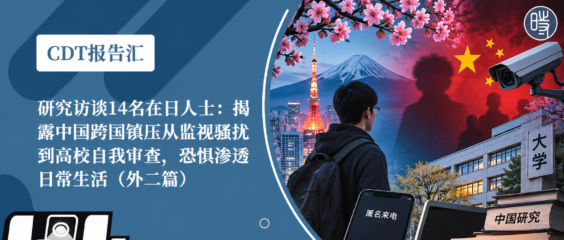
CDT 档案卡 标题:【CDT报告汇】研究访谈14名在日人士:中国跨国镇压从监视骚扰到高校自我审查,恐惧渗透日常生活(外二篇) 作者:中国数字时代 发表日期:2026.11.14 主题归类:CDT报告汇 主题归类:海外华人 主题归类:跨国镇压 主题归类:女性权利 CDS收藏:公民馆 版权说明:该作品版权归原作者所有。中国数字时代仅对原作进行存档,以对抗中国的网络审查。详细版权说明。 编者按:《CDT报告汇》栏目收录和中国言论自由及其他人权问题相关的报告资讯。这些报告的来源多种多样,包括机构调查、学术研究、媒体报道和网民汇集等等。也欢迎读者向我们推荐值得关注的报告。 中国数字时代本周推荐媒体: CHINA Books Review(中华书评):是一份在线出版物,将提供与中国图书相关的信息、见解和智慧的评论。该书评网站由中国连线 (The Wire China) 和亚洲协会美中关系研究中心 (Asia Society’s Center on U.S.-China Relations) 共同发起。该网站将免费提供由知名作家撰写的书评、作者访谈、编辑节选,以及更多类似《纽约书评》的一般性文章,并且将重点关注有关中国和来自中国的书籍以及更广阔的汉语世界。 一、研究访谈14名在日人士:中国跨国镇压从监视骚扰到高校自我审查,恐惧渗透日常生活 近日,研究机构CAD Chile与Analisis Sinico合作发表了一份研究报告《日本境内中共跨国镇压的图景:从自我审查到制度性压力》。报告揭露了中国当局如何通过监视、恐吓、向家属施压及高校内部的制度性压力,将政治控制延伸至日本社会。研究发现,跨国镇压不一定表现为直接暴力,也可能通过日常生活中的不信任与自我审查,使海外异议人士逐渐失去表达自由。 报告封面 据悉,研究人员于2024年7月至11月对14名在日中国留学生、学者、记者及香港、维吾尔活动人士进行了访谈,归纳出三种主要镇压机制:直接恐吓与监视、制度性配合,以及自我审查。 报告指出,一名调查中国海外活动的日本记者曾在一天内接到八通匿名电话,其中一通以机械声音要求她前往中国大使馆领取物品。另一名中国留学生抵达日本后,突然接到家乡警察的电话,对方警告他“要小心”,令他怀疑自己一直受到监控。…
This excerpt comes from the named source. Read the original for the full reporting.
Read the original at China Digital Times