Local
Clay City has sights set on sectional crown in second season under Steward
A Roundtable is a way to meet new people and discuss this article in person at a local coffee shop or other venue.
Roundtables are designed for groups of four, with a shared subject and room for everyone to speak. Come for discussion, with no dating expectation.
Source: The Brazil Times
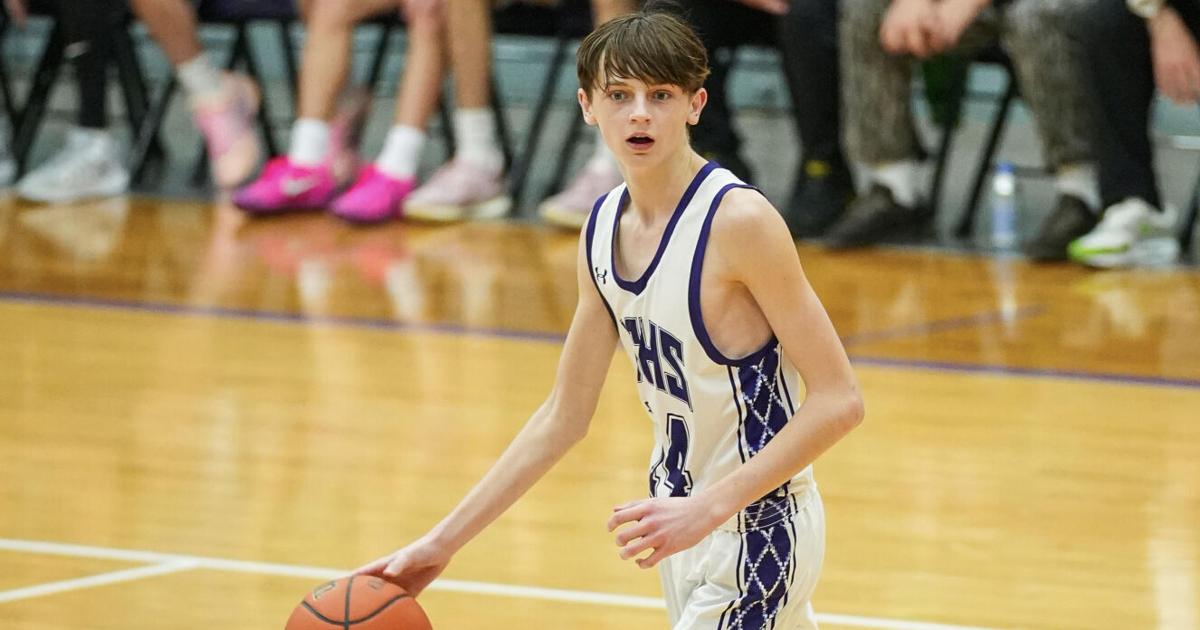
Clay City is expected to lean upon its three leading scorers — Dailon Keller, Carson Williamson and Brayden Wiram (pictured) — from last season as the program looks to return to sectional supremacy in 2026-27. File photo Lucas Steward was the new face at Clay City this time last year.He was tasked with taking over the boys basketball program that was coming off its best season in school history while implementing his own system at the same time.Clay City had its fair share of ups and downs throughout the winter and were ultimately knocked out of the sectional by Bloomfield with a 13-14 record.Now, the Eels are in Year 2 under Steward and things are much smoother, the second-year head coach acknowledged. However, there’s a difference between smooth and comfortable, and they’re leaning into making sure the uncomfortable parts of the season leads to success on the floor.“Things are definitely smoother in terms of everyone understanding how I like to go about things.
This excerpt comes from the named source. Read the original for the full reporting.
Read the original at The Brazil Times


