Local
Come for Lunch, Stay for History: Marla Matkin Presents “Widows of Little Big Horn” in Colby, Kansas
A Roundtable is a way to meet new people and discuss this article in person at a local coffee shop or other venue.
Roundtables are designed for groups of four, with a shared subject and room for everyone to speak. Come for discussion, with no dating expectation.
Source: HPPR
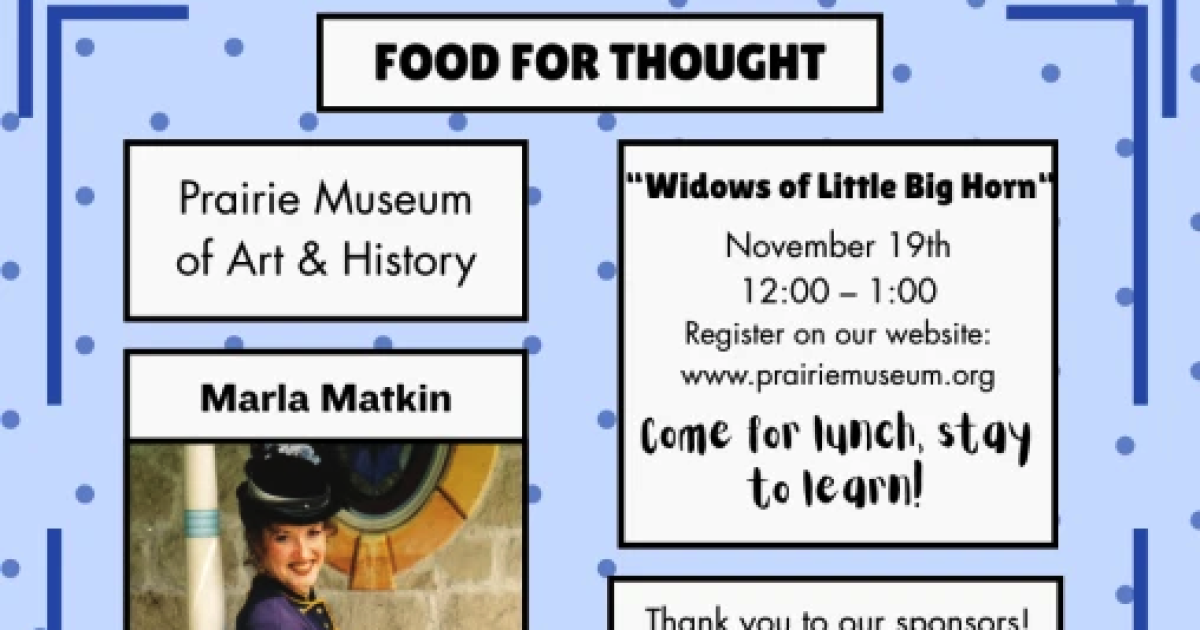
Facebook Twitter LinkedIn Email The Prairie Museum of Art & History’s Food For Thought series continues Thursday, Nov. 19, with a free lunch-and-learn. Looking for a lunch break with a side of history? The Prairie Museum of Art & History in Colby invites you to its next Food For Thought program on Thursday, Nov. 19. Beginning at noon CT, historian and storyteller Marla Matkin presents “Widows of Little Big Horn,” a one-hour talk that pairs a hot meal with a story from the American frontier. Matkin is a native Kansan and a descendant of homesteaders, as well as a former teacher and a respected historian and scholar. She’s best known for her portrayal of Elizabeth “Libbie” Custer, wife of General George Armstrong Custer, bringing her love of history and theatre to audiences who want to be entertained and educated at once.
This excerpt comes from the named source. Read the original for the full reporting.
Read the original at HPPR

