Local
Cummins and Balaji Win 98th Annual William Minor Lile Moot Court Competition
A Roundtable is a way to meet new people and discuss this article in person at a local coffee shop or other venue.
Roundtables are designed for groups of four, with a shared subject and room for everyone to speak. Come for discussion, with no dating expectation.
Source: Virginia Law Weekly
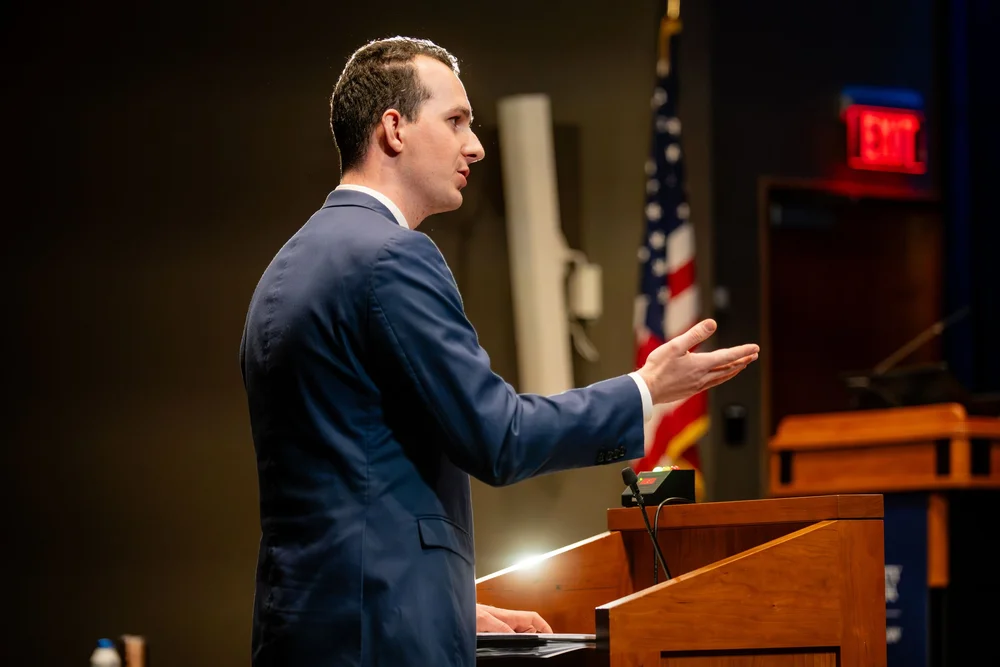
On Thursday, Nov. 12, UVA Law hosted the 98th Annual William Minor Lile Moot Court finals in Caplin Auditorium. Before a panel of Nicole G. Berner of the U.S. Court of Appeals for the Fourth Circuit, Kevin G. Ritz of the U.S. Court of Appeals for the Sixth Circuit, and Peter K. Killough of the Supreme Court of Maryland, as well as a packed crowd of students and faculty, two teams of finalists delivered oral arguments. Dan Cummins ’27 and Shree Balaji ’27, representing Thomas Miller, the appellant, and Caroline Davisson ’27 and Salaar Khan ’27, representing FantasyMavens.com, the appellee, litigated two discrete issues: Can a court in Lile exercise personal jurisdiction over FantasyMavens? Is Miller a consumer under the Video Privacy Protection Act (VPPA)? Justice Berner said, “You may proceed,” and the timer started for Dan Cummins, counsel for the appellant.
This excerpt comes from the named source. Read the original for the full reporting.
Read the original at Virginia Law Weekly