Local
Dakota Valley takes down Wagner in Class A volleyball consolation bracket
A Roundtable is a way to meet new people and discuss this article in person at a local coffee shop or other venue.
Roundtables are designed for groups of four, with a shared subject and room for everyone to speak. Come for discussion, with no dating expectation.
Source: Daily Republic
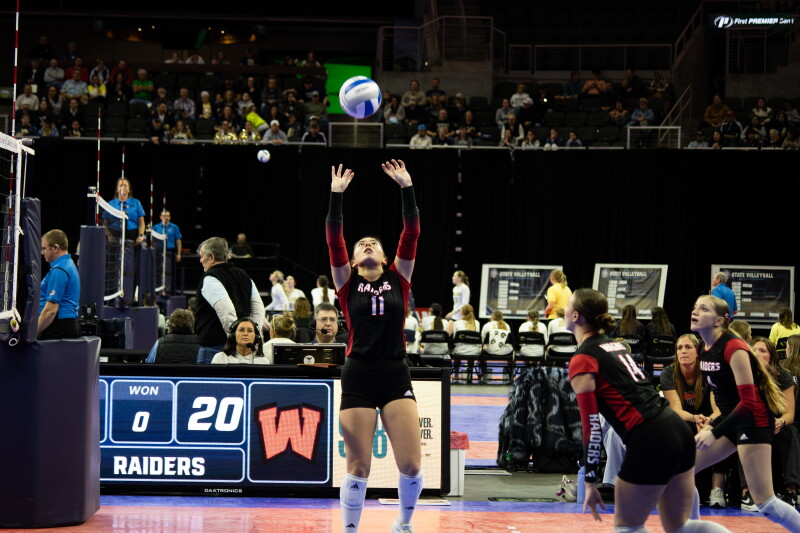
SIOUX FALLS — Dakota Valley powered its way past Wagner in a Class A state volleyball tournament consolation round match at the Premier Center on Friday afternoon. Set scores were 25-16, 25-19 and 26-24 in favor of the Panthers. Wagner (26-7) will play for seventh place in Class A at 11 a.m. on Saturday against Aberdeen Roncalli. Dakota Valley (24-12) will play Lennox for fifth place at 12:45 p.m. Saturday. In a rematch of the 2025 state quarterfinals, Dakota Valley finished with a 43-26 margin in team kills and 50-34 in digs, while ringing up a 12-6 edge in service aces. Aubree Worden put down 17 kills for Dakota Valley, while Kinley Maaske had seven kills and Skylar Anderson added six. Madie Munch had 35 assists and Coryn Kimbell tallied six aces and 15 digs in the win. For Wagner, Hannah Holzbauer had eight kills and eight digs to lead the Red Raiders in both categories. Ravyn Medricky had seven kills and Mateya Bruguier finished with six kills.
This excerpt comes from the named source. Read the original for the full reporting.
Read the original at Daily Republic