Local
Death and art: A first-person tour of the Bellefontaine Cemetery
A Roundtable is a way to meet new people and discuss this article in person at a local coffee shop or other venue.
Roundtables are designed for groups of four, with a shared subject and room for everyone to speak. Come for discussion, with no dating expectation.
Source: Student Life
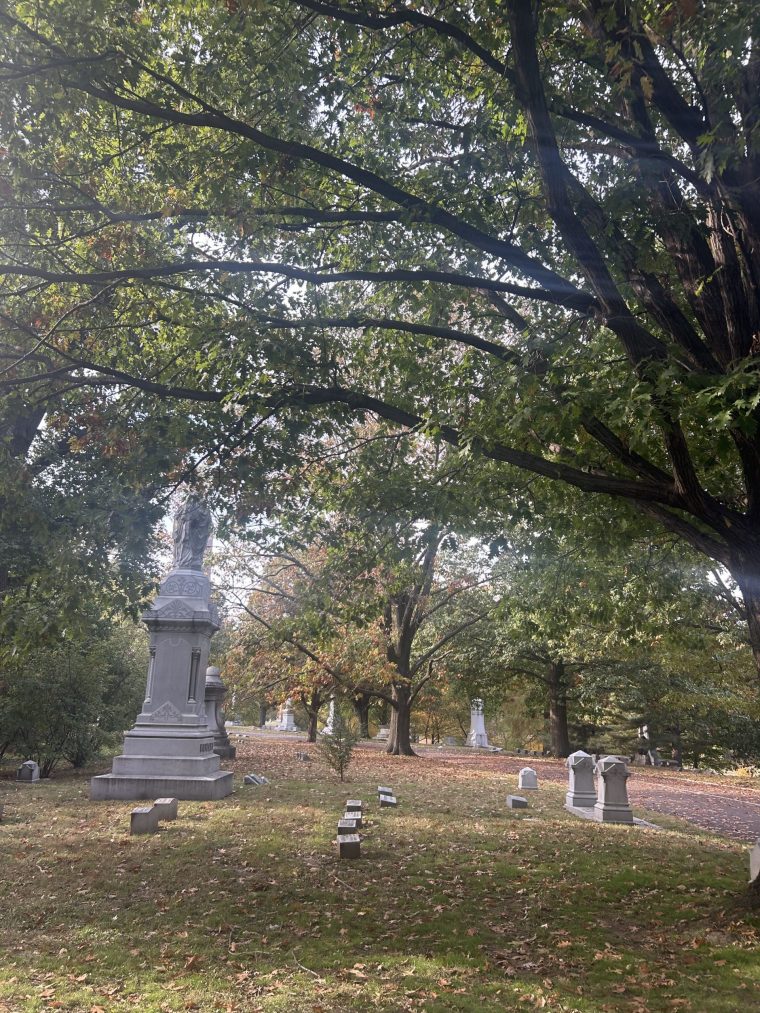
This past Halloween, I had the opportunity to tour the Bellefontaine Cemetery and Arboretum through an annual tradition hosted by the WashU Art History Club. Every year, the club tours prominent sites in the Bellefontaine Cemetery, located in North St. Louis. Bellefontaine Cemetery, established in 1849, is well known for beautiful works of architecture, as well as hosting prominent figures such as William Clark and James B. Eads. The cemetery’s 314 acres was much too large to see all of it in a few short hours so the Art History Club chose to focus on six main tombs.Our first stop contained a family that many have likely heard of: the Busch family. Adolphus Busch co-founded the Anheuser-Busch Brewery after marrying Lilly Anheuser. The oddest part was that, unlike most mausoleums, Lilly Anheuser and Adolphus Busch’s families were interred outside of the mausoleum, rather than inside.
This excerpt comes from the named source. Read the original for the full reporting.
Read the original at Student Life


