Local
Democrats who swept into the Senate promised change. A leadership vote is testing them early
A Roundtable is a way to meet new people and discuss this article in person at a local coffee shop or other venue.
Roundtables are designed for groups of four, with a shared subject and room for everyone to speak. Come for discussion, with no dating expectation.
Source: The Intelligencer & Wheeling News Register
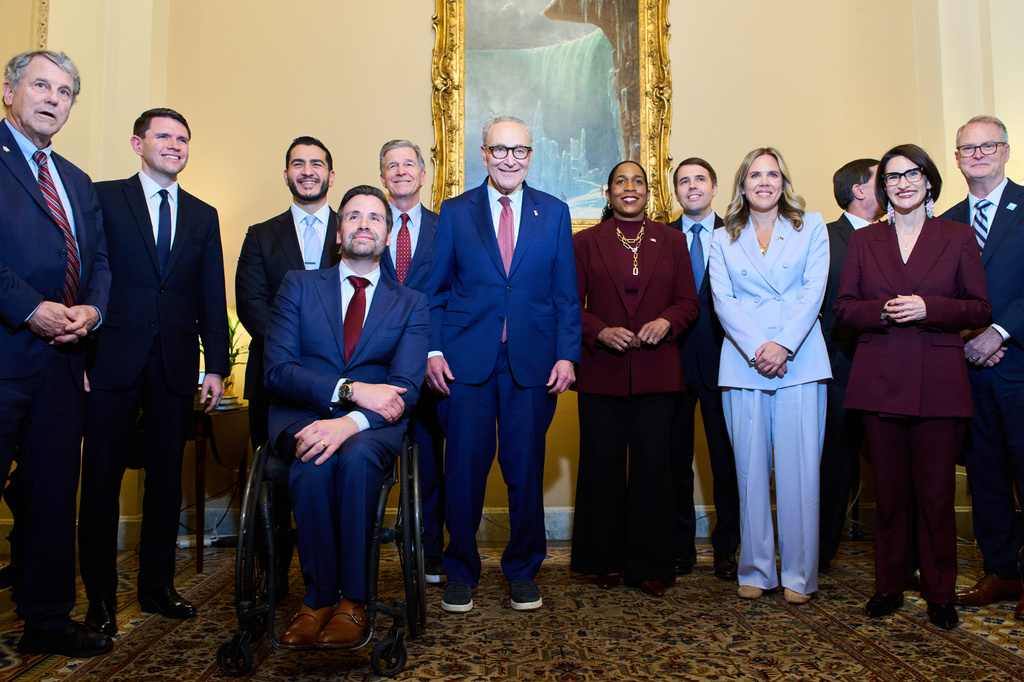
WASHINGTON (AP) — The Democratic Party’s incoming senators haven’t even been sworn into office yet, but the decision over who will lead their new majority is already testing the promise of change they made as candidates. The 13 new Democrats are part of the largest incoming Senate class in decades, with several winning in Republican strongholds by promising to shake up Washington and be independent voices. Now they are caught up in a classic insider fight, forced to decide whether to stick with longtime Senate leader Chuck Schumer of New York or back challenger Chris Van Hollen of Maryland. Newly elected progressives, including Abdul El-Sayed of Michigan and Peggy Flanagan of Minnesota, have backed Van Hollen, who is taking on Schumer with promises of a more aggressive legislative approach. Sen.-elect Sherrod Brown of Ohio, who is returning to Washington after losing his seat in 2024, supports Schumer.
This excerpt comes from the named source. Read the original for the full reporting.
Read the original at The Intelligencer & Wheeling News Register