Local
Do they have to spell it out for you? The story of UMaine’s Naked 5
A Roundtable is a way to meet new people and discuss this article in person at a local coffee shop or other venue.
Roundtables are designed for groups of four, with a shared subject and room for everyone to speak. Come for discussion, with no dating expectation.
Source: The Maine Campus
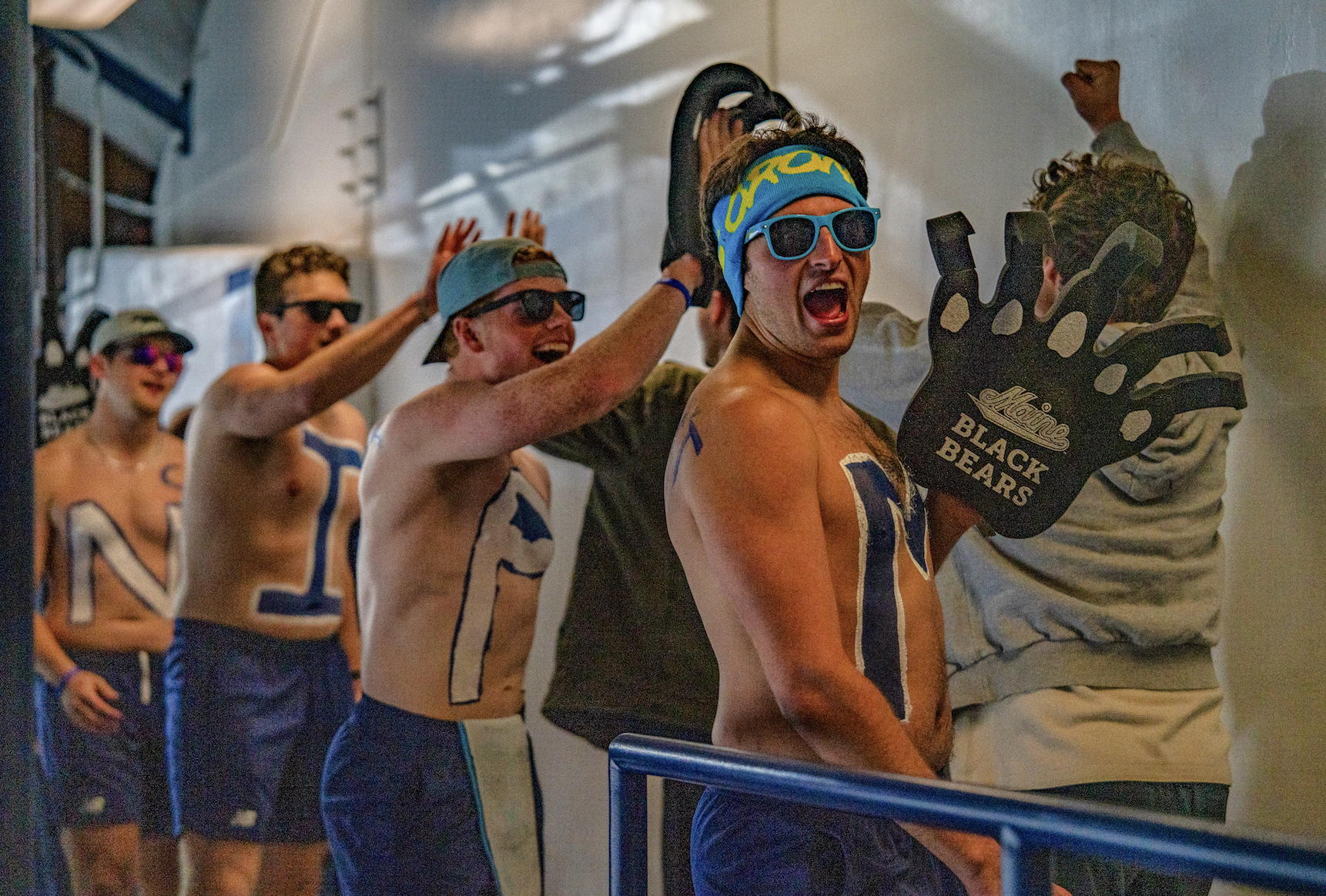
You’ve won the Sunday student ticket war for men’s hockey, and now you’re wondering what to expect. After waiting in line for an hour or more, you make it inside and are met with the Black Bear faithful dressed in blue. As you trek up to the student section, you see everyone packed in except for five empty seats. Soon, five shirtless men arrive to take those spots, each with a letter painted on his chest. Standing together, they spell out “MAINE.” The group also sports a message on their backs that takes a jab at the opposing team. Known as the Naked 5, the tradition began in 1993 with four students from Hart Hall and has since become a defining feature of UMaine fan culture. Nowadays, five brothers from Sigma Phi Epsilon paint the letters of “MAINE” on their skin for games, but there’s much more history and symbolism to the group than meets the eye. The current members are as follows: wearing the “M” is Drew Denoncour, a fourth-year chemical engineering student.
This excerpt comes from the named source. Read the original for the full reporting.
Read the original at The Maine Campus



