Local
East Channel Opening Could Help Napeague Harbor Scallops
A Roundtable is a way to meet new people and discuss this article in person at a local coffee shop or other venue.
Roundtables are designed for groups of four, with a shared subject and room for everyone to speak. Come for discussion, with no dating expectation.
Source: The East Hampton Star
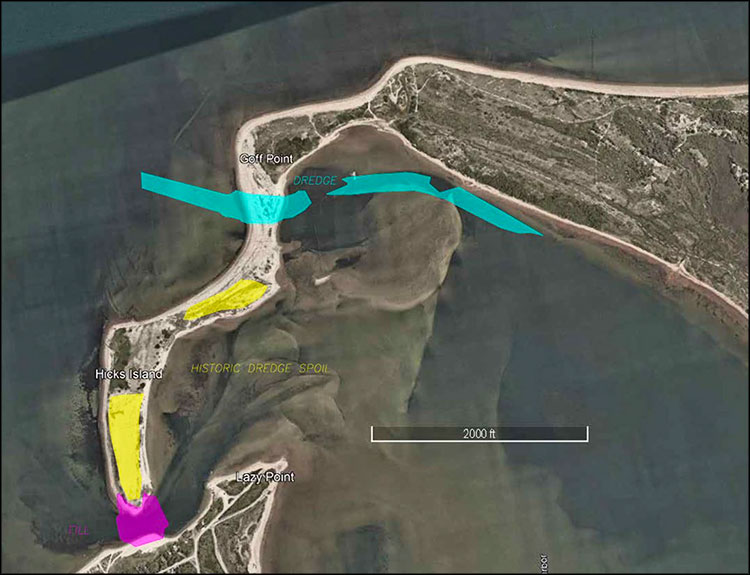
Share on Facebook Share on Twitter Share through email Published 4 days ago Last updated 4 days ago In this aerial view of Napeague Harbor, the magenta shows the area that will be filled in, yellow the area where dredge spoil was historically placed, and turquoise the area that is to be dredged to reopen the east channel into the harbor. D.B. Bennett Consulting Engineer By Christopher Walsh November 19, 2026 The long process of planning to reopen the east channel of Napeague Harbor, which began to close early in this century and has been completely closed since 2012, was once again taken up by the East Hampton Town Trustees when they met last week. One year ago, the trustees voted to allocate up to $25,000 to Drew Bennett of D.B. Bennett Engineering to prepare an application to the New York State Department of Environmental Conservation, which along with the federal Army Corps of Engineers would have to sign off on the project.
This excerpt comes from the named source. Read the original for the full reporting.
Read the original at The East Hampton Star


