Local
Elaine de Kooning’s American Vistas
A Roundtable is a way to meet new people and discuss this article in person at a local coffee shop or other venue.
Roundtables are designed for groups of four, with a shared subject and room for everyone to speak. Come for discussion, with no dating expectation.
Source: The East Hampton Star
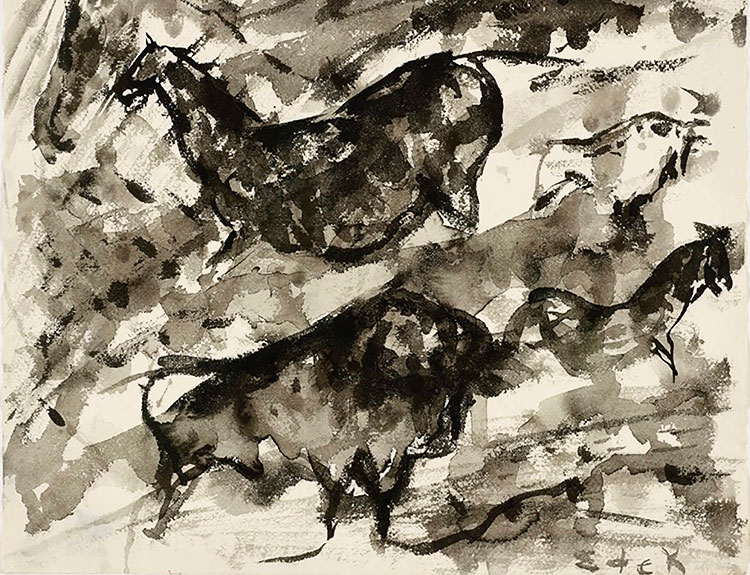
Share on Facebook Share on Twitter Share through email Published 13 hours ago Last updated 1 day ago Elaine de Kooning’s “Cave #194” (circa 1987), sumi ink on paper, is at the Berry Campbell Gallery in Chelsea. By Tim Keane November 25, 2026 Elaine de Kooning’s tempestuous engagements, intellectual interventions, and artistic pursuits across half of the last century have so preoccupied biographers that even the most recent publications have lacked insightful assessments of the prodigious artwork that the frenetic life produced. Two recent solo exhibitions that partly redressed the deficit were “Elaine de Kooning Portrayed,” at the Pollock-Krasner House and Study Center in 2015, and “Elaine de Kooning Portraits,” a large retrospective at the National Portrait Gallery in Washington, D.C., in 2015-16. However, her relevance to the art of today awaits an institutional event as comprehensive as the seven-museum traveling exhibition organized three decades ago by the Georgia Museum of Art.
This excerpt comes from the named source. Read the original for the full reporting.
Read the original at The East Hampton Star


