Local
'Endless' alternatives remain in Rochester's search for a new water source
A Roundtable is a way to meet new people and discuss this article in person at a local coffee shop or other venue.
Roundtables are designed for groups of four, with a shared subject and room for everyone to speak. Come for discussion, with no dating expectation.
Source: Post-Bulletin
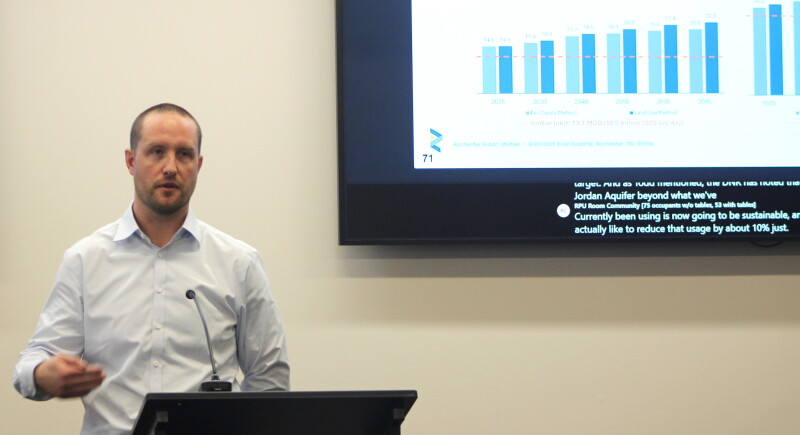
ROCHESTER — The vision for a future Rochester water source remains a bit murky as study continues. “There are an endless amount of alternatives,” said Aaron Vollmer, who is leading Rochester Public Utilities’ water study. “Our team is working hard to really boil that down into what are the realistic alternatives that we can get our arms around to understand the general range of costs that we are looking at as we move forward toward a solution.” The project manager from AE2S, a water engineering consulting firm contracted by RPU, told Rochester's Public Utilities Board on Tuesday that the ongoing study is making headway in efforts to evaluate alternative water sources. The city-owned utility initiated the search for new water sources following a 2024 Minnesota Department of Natural Resources ban on digging more Rochester wells into the Jordan Aquifer, which has provided local drinking water for more than a century.
This excerpt comes from the named source. Read the original for the full reporting.
Read the original at Post-Bulletin


