Local
Endless Interpretations and Limited Time: Cardinal Pictures’ 48 Hour Film Festival
A Roundtable is a way to meet new people and discuss this article in person at a local coffee shop or other venue.
Roundtables are designed for groups of four, with a shared subject and room for everyone to speak. Come for discussion, with no dating expectation.
Source: The Wesleyan Argus
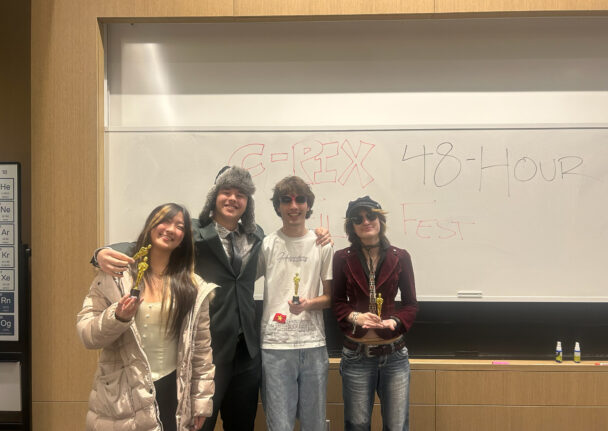
The audience’s murmurs fell silent as the lights dimmed, and the projector in room A102 of the Casper Life Sciences Building lit the screen, finally debuting students’ hard work. After just two days of writing, filming, and editing, participants in Cardinal Pictures’ annual 48-hour film festival gathered to showcase the films they had created in a single weekend. Cardinal Pictures, a student-run production house, organizes the 48-hour film festival each year, where students in groups of two to four sign up and are challenged to film a short movie in two days using only one phone and a tripod. This year, Cardinal Pictures announced the theme “Endless” at noon on Friday, Nov. 13. Students picked up their tripods at 5 p.m. that day, and had to submit their final movies by 5 p.m. on Sunday, Nov. 15. The submitted films were screened shortly thereafter, at 7:30 p.m. The theme “Endless” is undoubtedly broad, and teams took full creative advantage of it.
This excerpt comes from the named source. Read the original for the full reporting.
Read the original at The Wesleyan Argus