Local
Ephrata Cloister’s Role as a Revolutionary War Hospital
Meet in Common connects news with real conversations. Use ThinkMatch to arrange a Roundtable and meet people to discuss this story.
Roundtables are designed for groups of four, with a shared subject and room for everyone to speak. Come for discussion, with no dating expectation.
Source: Lancaster Farming
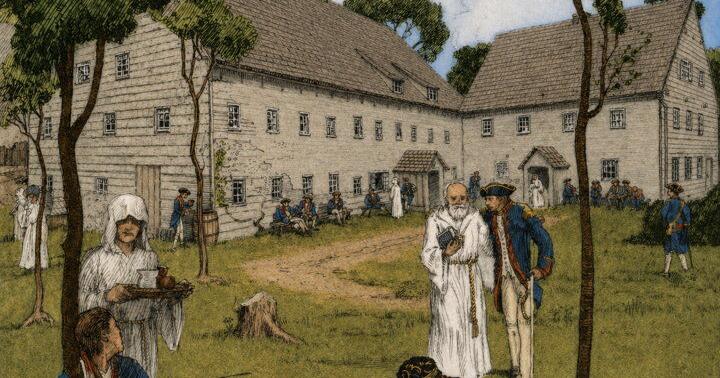
It was 1732 when Conrad Beissel, an immigrant from Europe’s Palatinate area, established an ascetic religious community in Ephrata, Pennsylvania. Given the pacifist principles on which he founded his semi-monastic “Camp of the Solitary,” he could never have foreseen that nine years after his death in 1768, two structures on the sect’s property would become a Revolutionary War hospital for wounded and sick soldiers. As part of the Cornwall Iron Furnace speaker’s series, Bradley Smith, Pennsylvania Historical and Museum Commission’s site administrator for the Ephrata Cloister, recently gave a presentation about the Cloister’s role as a temporary hospital during the American Revolution. Smith said he has been tasked with doing research to correct numerous historical inaccuracies surrounding the Cloister’s hospital. Smith explained the followers of Conrad Beissel included two types of adherents.
This excerpt comes from the named source. Read the original for the full reporting.
Read the original at Lancaster Farming