Local
EV Realty breaks ground on Torrance truck charging hub
A Roundtable is a way to meet new people and discuss this article in person at a local coffee shop or other venue.
Roundtables are designed for groups of four, with a shared subject and room for everyone to speak. Come for discussion, with no dating expectation.
Source: FreightWaves
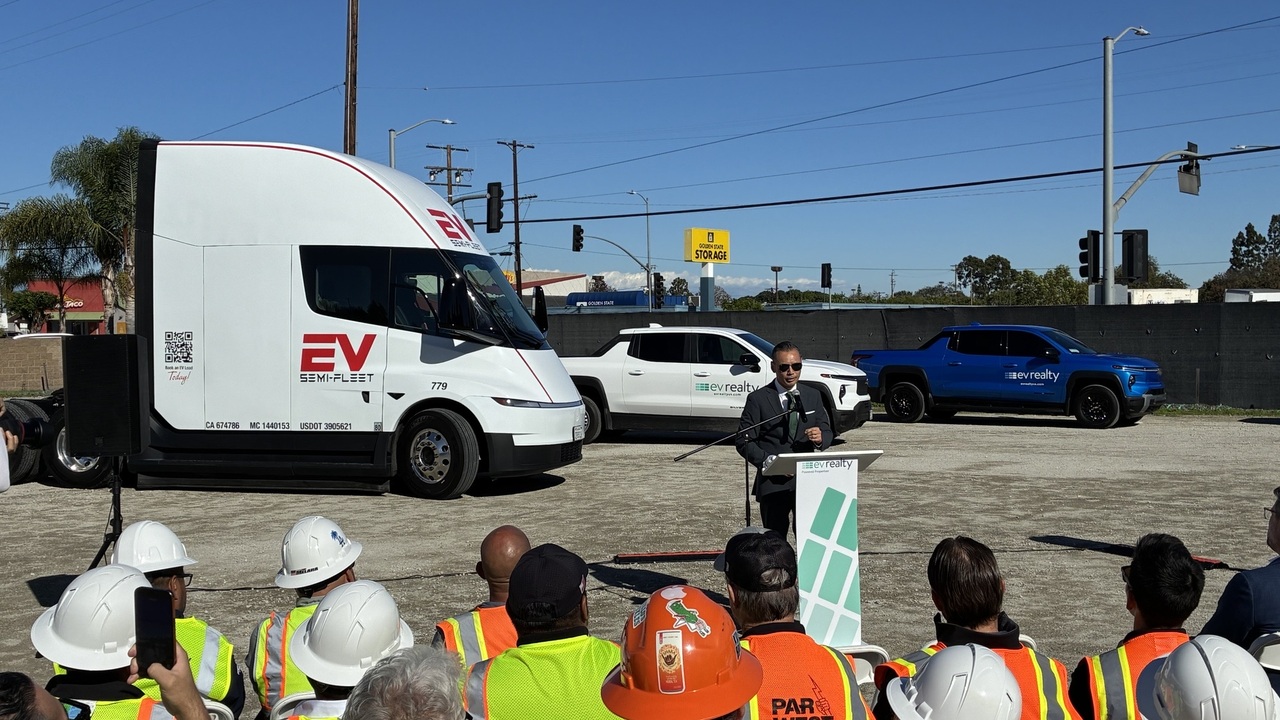
EV Realty has broken ground on a 9 MW electric truck charging site in Torrance, California, that will have 50 charging ports when it opens to commercial fleets in mid-2027. The company announced the groundbreaking Tuesday. Torrance is its second site in Southern California, after a 76-port hub in San Bernardino opened in April. The hub is aimed at trucks serving the ports of Los Angeles and Long Beach, inland distribution centers, and air cargo around Los Angeles International Airport. California Transportation Commission records show 20 of the 50 ports will use the Megawatt Charging System, or MCS, at up to 1.2 MW. The other 30 will be standard DC fast chargers at up to 350 kW. The site at 18715 S. Western Ave. sits beside Interstate 405 with a direct connection to Interstate 110. Outpost, which has invested in EV Realty, added the 2.2-acre property to its truck terminal network in March and is a partner on the project along with ParWest and Synop.
This excerpt comes from the named source. Read the original for the full reporting.
Read the original at FreightWaves


