Local
FAU receives $3M to build Florida’s quantum-ready workforce
Meet in Common connects news with real conversations. Use ThinkMatch to arrange a Roundtable and meet people to discuss this story.
Source: Refresh Miami
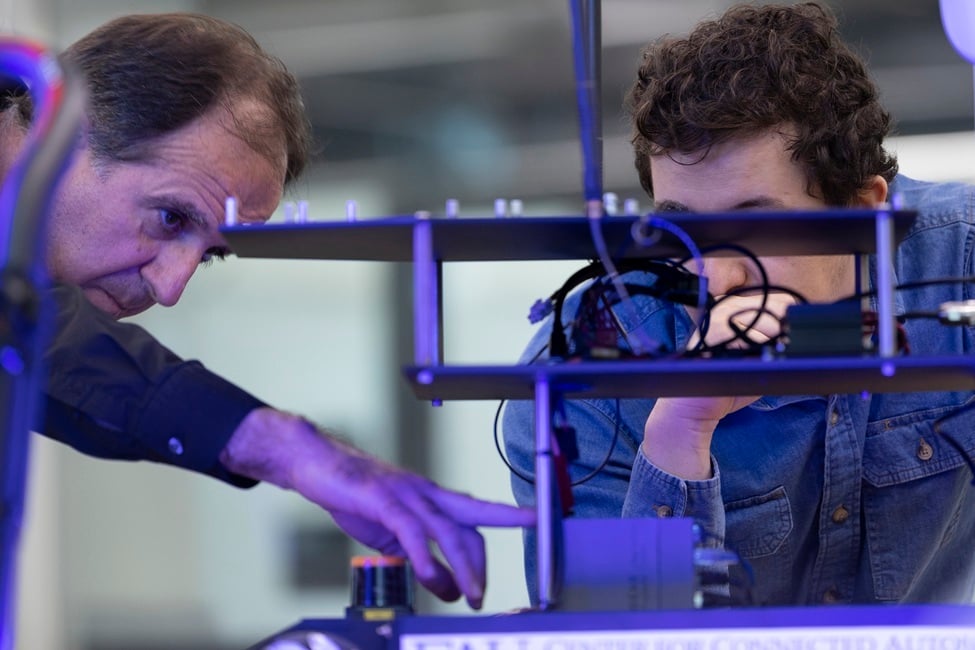
By Gisele Galoustian / FAU News Florida Atlantic University’s Center for Connected Autonomy and Artificial Intelligence (CA-AI), within the College of Engineering and Computer Science, received a $3 million award from the U.S. Department of Labor’s Strengthening Institutions Program to develop a quantum-ready workforce in Florida through education and research training in quantum-enabled sensing and communications. The project, “Building Florida’s Quantum-Ready Workforce: Quantum-Skilled Pathways in Integrated Sensing and Communications from Early College to Graduate Studies,” is led by George Sklivanitis, Ph.D., associate director of CA-AI, Charles E. Schmidt Associate Research Professor in the Department of Electrical Engineering and Computer Science and fellow of the Institute for Smarter Cities, Spaces, and Health; and Dimitris Pados, Ph.D., director of CA-AI, Charles E.
This excerpt comes from the named source. Read the original for the full reporting.
Read the original at Refresh Miami