Local
Former FBI director and security advisor reflect on surveillance legacy 25 years after 9/11
Meet in Common connects news with real conversations. Use ThinkMatch to arrange a Roundtable and meet people to discuss this story.
Source: The Stanford Daily
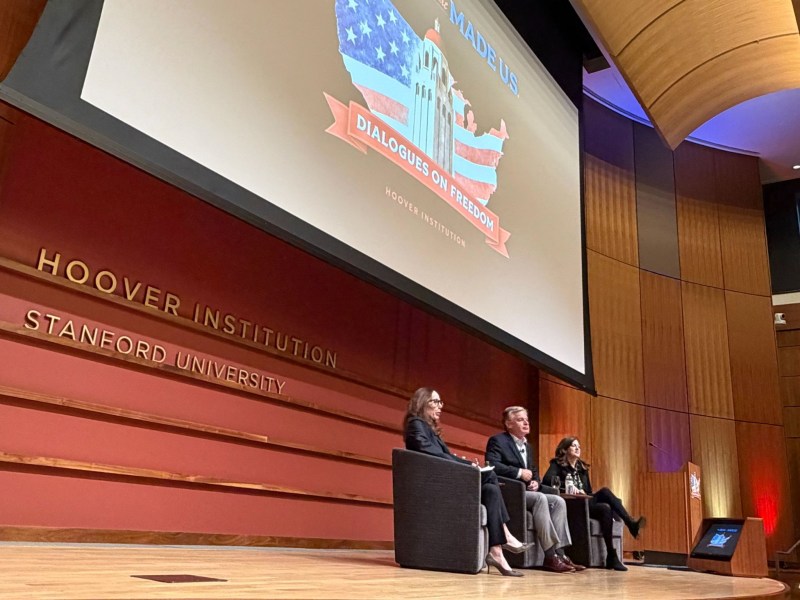
The Hoover Institution invited former government security officials Anne Neuberger and Christopher Wray to weigh in on the country’s current surveillance state and secret intelligence 25 years after 9/11. The Thursday event was part of the Hoover Institution’s series commemorating the United States’ 250th anniversary. Neuberger was a deputy national security advisor under the Biden Administration and is currently a Hoover visiting fellow. From 2017 to 2025, Wray was the director of the FBI and is also currently a Hoover visiting fellow. The event’s discussion panel was moderated by political science professor and Hoover fellow Amy Zegart, who leads the Technology Policy Accelerator and the Oster National Security Affairs Fellows Program, in addition to teaching INTNLREL 115: “Spies, Lies and Algorithms. Zegart asked Wray and Neuberger how they balance protecting the public with protecting individual rights and public accountability, a debate that emerged after the U.S.
This excerpt comes from the named source. Read the original for the full reporting.
Read the original at The Stanford Daily