Local
Gilmanton library’s ‘Arts in the Library’ features Richard Canto
A Roundtable is a way to meet new people and discuss this article in person at a local coffee shop or other venue.
Roundtables are designed for groups of four, with a shared subject and room for everyone to speak. Come for discussion, with no dating expectation.
Source: The Laconia Daily Sun
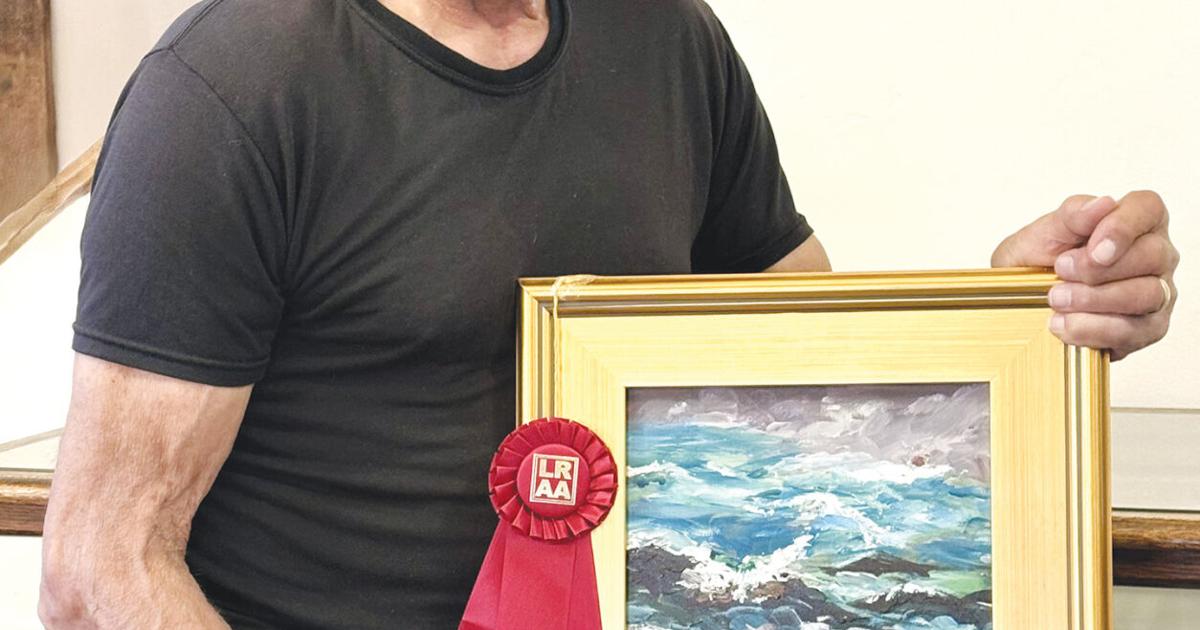
GILMANTON — Richard Canto brings sweeping landscapes of vibrant color to the Gilmanton Year-Round Library space for November. Besides the landscapes, there is a featured large canvas of locomotives fronting a background of Colorado mountains that captures his love of trains since a young child. Canto’s earliest memories of his artistic endeavors involve drawing on butcher paper as a 6-year-old in his father’s Italian neighborhood grocery store and butcher shop. At 13, he won a townwide art contest to illustrate the 1958 Annual Town Report with a pen and ink drawing of Cyrus Wakefield for whom his home town of Wakefield, Massachusetts, is named. He won a $25 savings bond and was featured on the inside cover. At 15, he was the youngest student admitted to The School of Applied Art in Boston, now known as the Art Institute of Boston. As a teenager, Canto accompanied his older brother to the car races in Sanford, Maine, where he earned money by pinstriping hotrods and motorcycles.
This excerpt comes from the named source. Read the original for the full reporting.
Read the original at The Laconia Daily Sun


