Local
Global War on Terror Featured in New Exhibit at NYS Military Museum
A Roundtable is a way to meet new people and discuss this article in person at a local coffee shop or other venue.
Roundtables are designed for groups of four, with a shared subject and room for everyone to speak. Come for discussion, with no dating expectation.
Source: Westside News
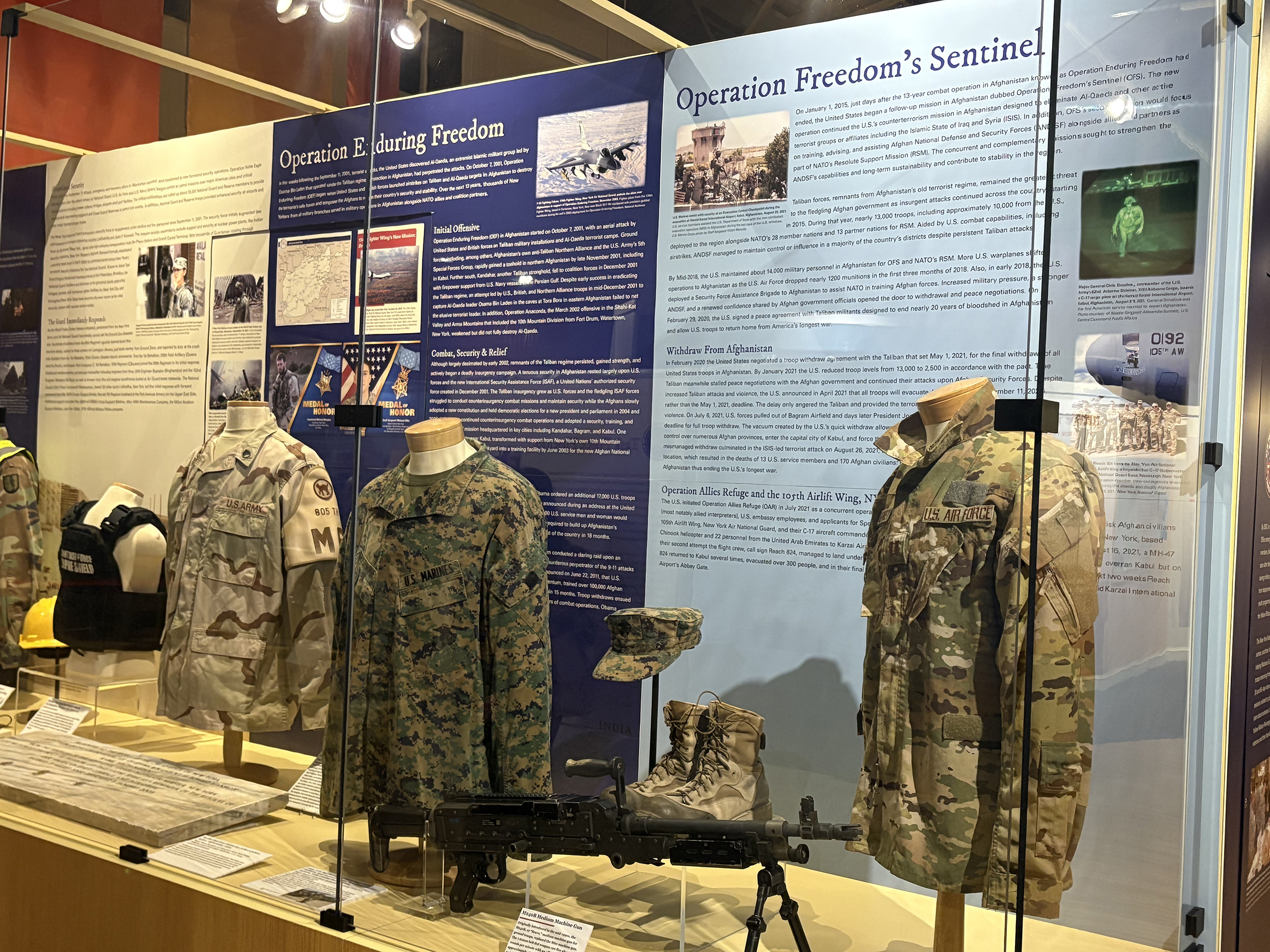
An exhibit commemorating New Yorkers who fought the Global War on Terror – GWOT in military speak – officially opened on Thursday, November 5, at the New York State Military Museum and Veterans Research Center in Saratoga Springs. Major General Ray Shields, the adjutant general of New York, cut the ceremonial ribbon along with retired Major General Joseph Taluto, who commanded the New York National Guard’s 42nd Infantry Division in Iraq in 2005. The museum, located in the Saratoga Armory, is maintained by the New York State Division of Military and Naval Affairs. It tells the story of New York’s military history from the American Revolution to the present. The 20 years of conflict that began with the September 11, 2001, attacks on the Twin Towers in New York City needs to be remembered, Shields said.
This excerpt comes from the named source. Read the original for the full reporting.
Read the original at Westside News


