Local
Gobble, cluck and purr
A Roundtable is a way to meet new people and discuss this article in person at a local coffee shop or other venue.
Roundtables are designed for groups of four, with a shared subject and room for everyone to speak. Come for discussion, with no dating expectation.
Source: Madera Tribune
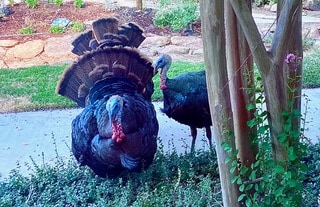
The first Thanksgiving in 1621 lasted 3 days and according to the Farmers’ Almanac, the Pilgrims ate waterfowl, wild turkey, venison, shellfish, bass, cod, flint corn, and stewed pumpkin. Today, traditional feasts this time of year have changed dramatically and often center on domestic turkeys served in a grand fashion. Domestic turkeys (bred for meat quality) have a reputation for being less than brilliant, docile and slow moving. However, the wild turkey has keen eyesight, agile and known to be quick of wing and foot. Wild turkeys in California are primarily the Rio Grande subspecies introduced in the 1950s-1990s by the California Department of Fish and Wildlife after the native turkey Meleagris californica went extinct. Wild turkeys have expanded their range throughout California since the 1970s and their current population is estimated at roughly a quarter million birds. Many consider the turkey’s recovery one of the greatest conservation achievements of the 20th century.
This excerpt comes from the named source. Read the original for the full reporting.
Read the original at Madera Tribune