Local
Guestwords: Why Mile Hill Road Is So Beautiful
A Roundtable is a way to meet new people and discuss this article in person at a local coffee shop or other venue.
Roundtables are designed for groups of four, with a shared subject and room for everyone to speak. Come for discussion, with no dating expectation.
Source: The East Hampton Star
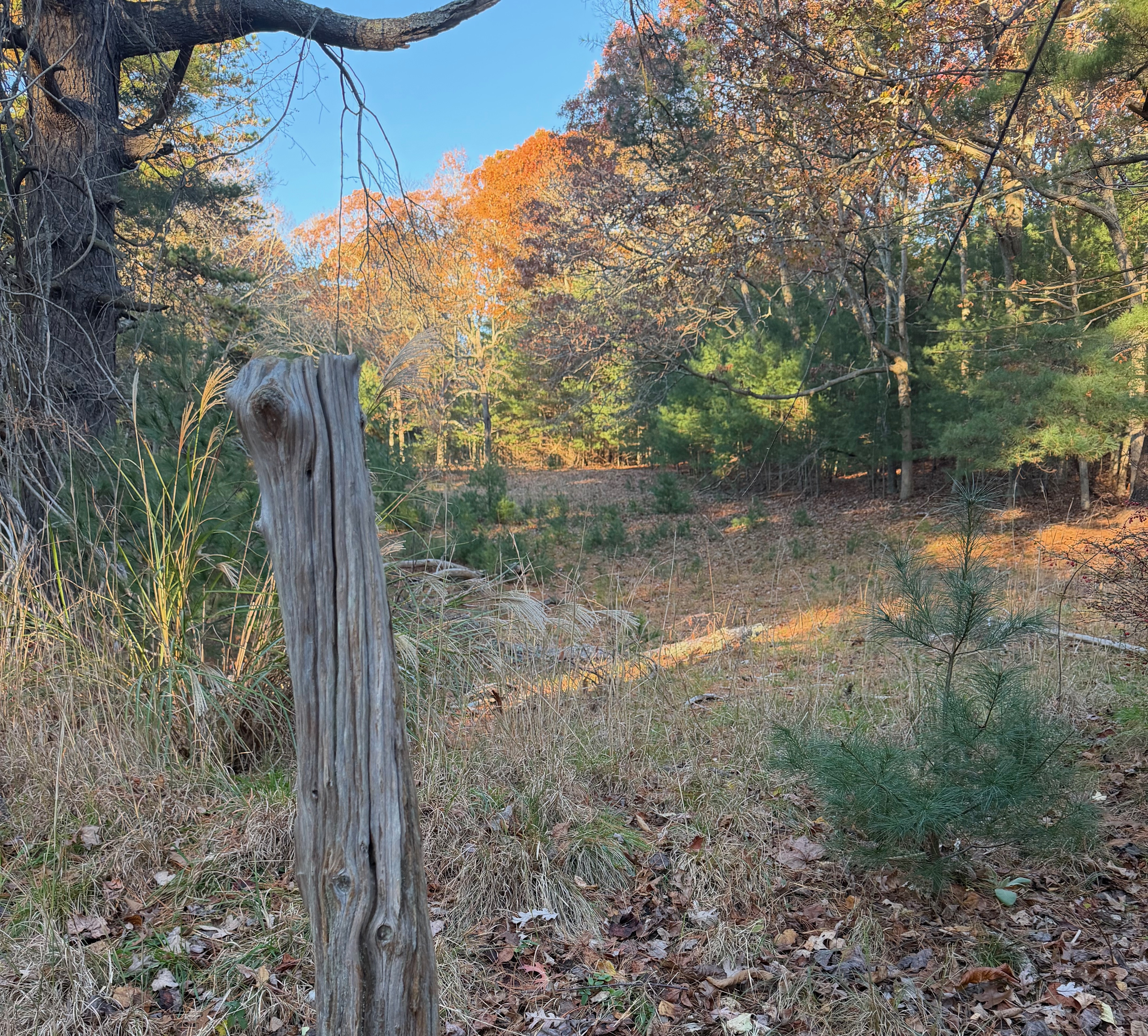
Share on Facebook Share on Twitter Share through email Published 2 days ago Last updated 2 days ago John Monk likely installed this fence post around 1895. Beyond it, white pines and brush are slowly reclaiming the pasture where the Koncelik and Whelan families once grazed their cows. Larry Koncelik By Larry Koncelik November 25, 2026 The town was founded in 1648. Town records show road access into Northwest as early as 1652, and by 1736 local highway records were already referring to “the Mile Hill” and “the parting of the paths at a place called Mile Hill.” The road was once referred to as “Road to the bank where the Whale was Tryed.” I have known Mile Hill Road since childhood. When I was young, my mother once remarked that it was a beautiful road. The comment has stayed with me, perhaps because Mile Hill Road was not simply a road we occasionally traveled; it was part of the landscape in which I grew up.
This excerpt comes from the named source. Read the original for the full reporting.
Read the original at The East Hampton Star


