Local
He set sail to raise awareness for missing children. Along the way, the story changed
Meet in Common connects news with real conversations. Use ThinkMatch to arrange a Roundtable and meet people to discuss this story.
Roundtables are designed for groups of four, with a shared subject and room for everyone to speak. Come for discussion, with no dating expectation.
Source: Detroit Lakes Tribune
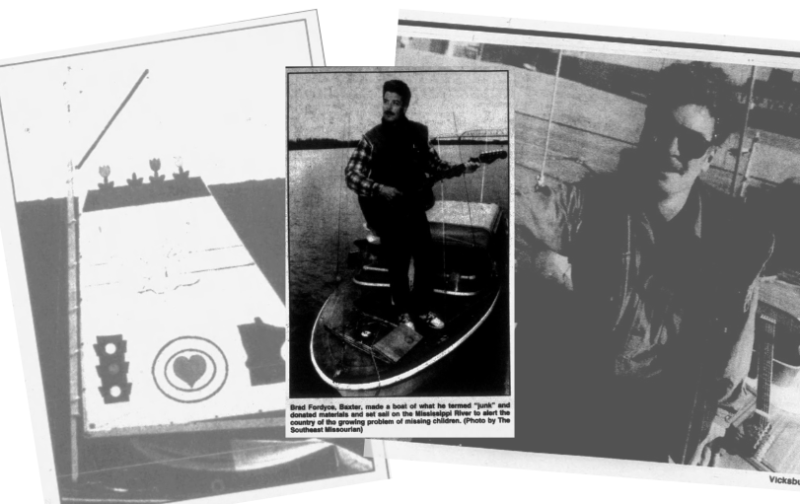
BRAINERD, Minn. — It started as a solo sailing mission, with the goal of raising awareness for missing children. That’s how Bradley D. Fordyce originally introduced his one-man sailing adventure — from Canada to New Orleans — in the summer of 1994. “If there is a chance in one million that I’ll find someone who is missing, it’s worth every effort and sacrifice I’ve made,” Fordyce told The Brainerd Dispatch. Fordyce had crafted his vessel, in part, from a salvaged sailboat. A 16-foot fiberglass runabout was reconfigured into a sail. Aluminum lined the sides of the boat. His 3,000-mile journey wasn’t intended to be a comfortable one. And that was the point. The sail was painted with symbols that highlighted the cause, which he dubbed “The Missing Flower Expedition.” The emblems of the Jacob Wetterling Foundation, Missing Children of Minnesota and the Amber Alliance of California were front and center. The organizations endorsed his journey, Fordyce told the Brainerd Dispatch.
This excerpt comes from the named source. Read the original for the full reporting.
Read the original at Detroit Lakes Tribune