Local
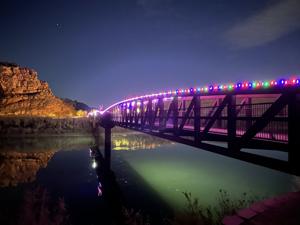
Holiday lights return to Moab’s river bridge Dec. 11
A Roundtable is a way to meet new people and discuss this article in person at a local coffee shop or other venue.
Roundtables are designed for groups of four, with a shared subject and room for everyone to speak. Come for discussion, with no dating expectation.
Source: Times-Independent

Grand County commissioners approved five items Nov. 17, including a $69,500 contract to bring holiday lights back to the Colorado River pedestrian bridge and $150,000 to pave Jackson Street’s full width. Holiday bridge lights Commissioners unanimously awarded Marvel Lighting Services a $69,500 contract for holiday lighting at the Colorado River pedestrian bridge and Lions Park, using transient room tax promotion funds. A holiday festival from 5 p.m. to 9 p.m. Dec. 11 will mark the official start of the bridge lighting season, according to Tara Deryck of the Moab Office of Tourism. The office expects the lights to operate nightly through the end of the year, with removal after the first week of January. Additional event details are being finalized. Marvel’s proposal calls for about 49,000 lights, including lighting on seven cottonwood trees, at least 6,000 bulbs along the bridge and illuminated snowflakes.
This excerpt comes from the named source. Read the original for the full reporting.
Read the original at Times-Independent