Local
How Big Meat transformed the slaughterhouse
A Roundtable is a way to meet new people and discuss this article in person at a local coffee shop or other venue.
Roundtables are designed for groups of four, with a shared subject and room for everyone to speak. Come for discussion, with no dating expectation.
Source: Allied News
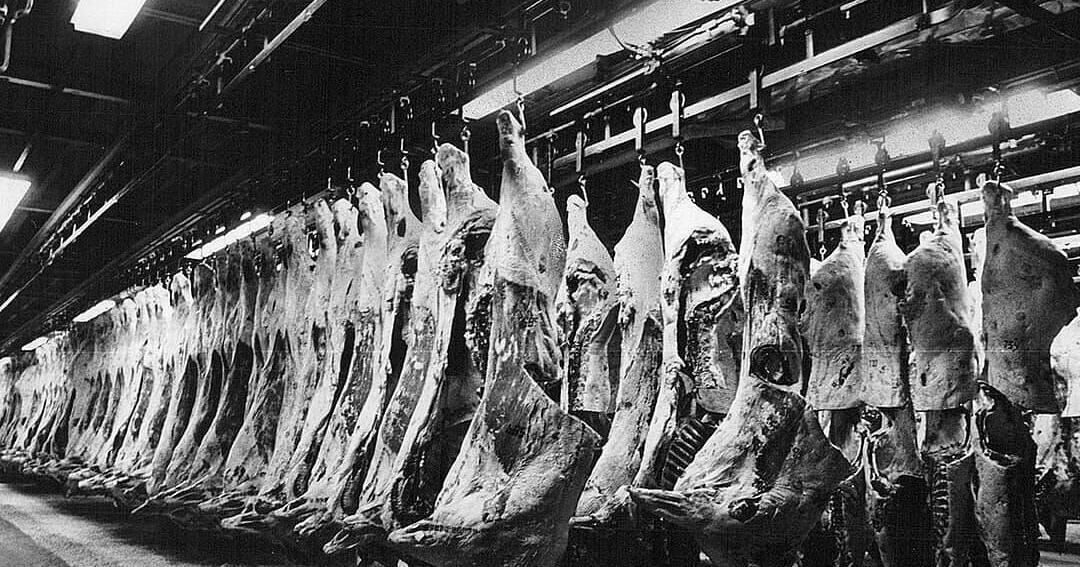
In the U.S., around 10 billion land animals are slaughtered for food each year, the vast majority in large industrial facilities. Slaughterhouses are supposed to comply with at least minimal animal welfare standards — one law for poultry birds and one for other animals raised for meat. Yet when these guidelines are violated, records show that enforcement itself is modest: often limited to shutting down slaughter for a day or two until facilities promise to fix the problem. A recent undercover investigation by the non-profit advocacy group Animal Outlook filmed conditions at a chicken slaughterhouse in North Carolina operating at a 175-birds-per-minute kill-line speed. The investigator documented workers slamming birds into shackles, some being hung by one leg and some being cut while fully conscious. This is what meatpacking increasingly looks like today.
This excerpt comes from the named source. Read the original for the full reporting.
Read the original at Allied News