Local
How did a Romanian queen end up in a North Dakota farmer's lap 100 years ago this month?
A Roundtable is a way to meet new people and discuss this article in person at a local coffee shop or other venue.
Roundtables are designed for groups of four, with a shared subject and room for everyone to speak. Come for discussion, with no dating expectation.
Source: Jamestown Sun
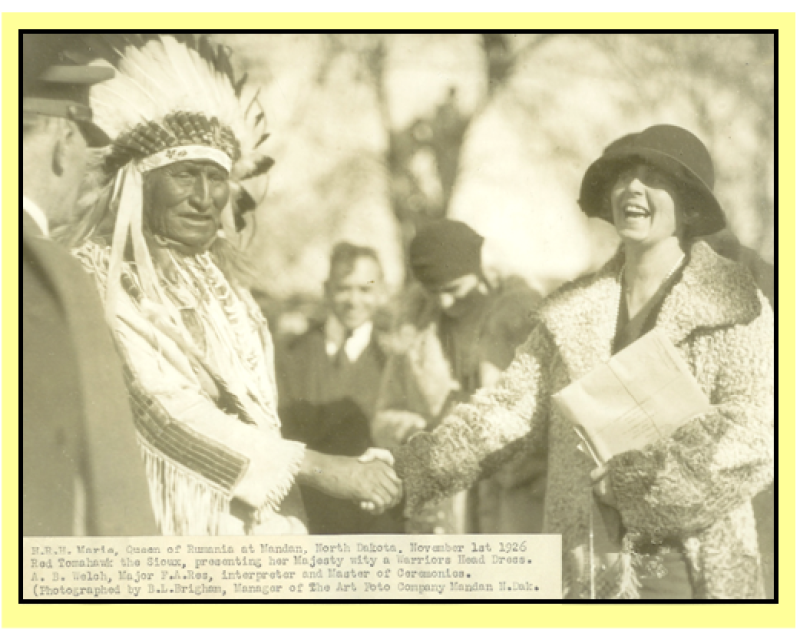
FARGO — Decades before Princess Diana became the “people’s princess,” another royal captured Americans’ hearts, even those of some stoic North Dakotans. In November 1926, the people of Fargo, Valley City, Jamestown and beyond declared that Queen Marie of Romania would make a darn good neighbor. “A regular fellow, and a good sport,” The Forum reported the next day, summing up the reaction along the Northern Pacific tracks from Fargo to Beach. So how did the queen of Romania — the granddaughter of Queen Victoria — end up schmoozing with North Dakotans on a Northern Pacific train 100 years ago this month on a whirlwind 12-hour trip across the state? It all started a couple of weeks earlier when the 51-year-old queen, her son, Prince Nicholas, 23, and daughter, Princess Ileana, 17, arrived in New York City. The visit fulfilled her long-held wish to see America and build goodwill for Romania.
This excerpt comes from the named source. Read the original for the full reporting.
Read the original at Jamestown Sun