Local
How Ports Work: Cranes, Customs and the Loading of World Cargo
Meet in Common connects news with real conversations. Use ThinkMatch to arrange a Roundtable and meet people to discuss this story.
Source: USA Post 21
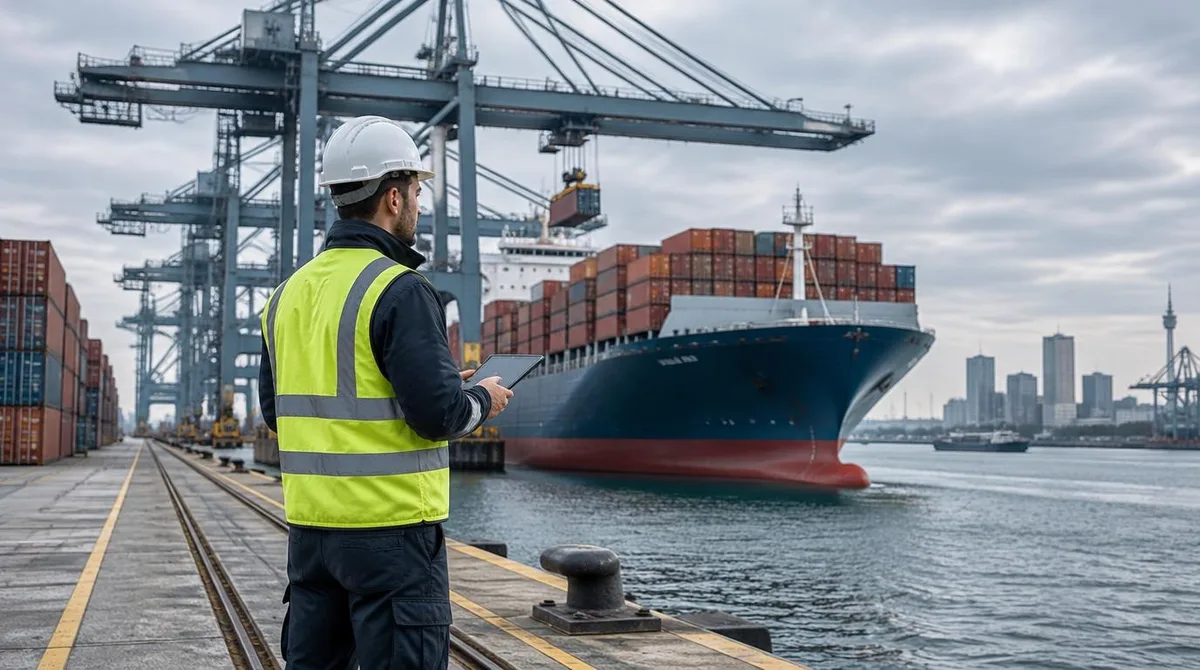
A port is a maritime facility with wharves or loading areas where ships take on and discharge cargo and passengers. It is the hinge of world commerce. According to Wikipedia's overview of ports, about 70% of global merchandise trade by value passes through one, which is why understanding how ports work means understanding how goods actually move from factory to shelf. The work at a modern port is mostly hidden from public view. Visitors see gantry cranes and stacked containers; the real choreography happens in the terminal operating plan, the customs paperwork and the handoffs between ship, yard and truck. Each move is scheduled, and each schedule depends on the one before it. This explainer walks through that sequence: what a port physically is, how a container terminal handles a ship call, where customs fits in, and what the whole system costs in environmental and climate terms. Readers who want the rules that govern the goods themselves can start with our trade coverage.
This excerpt comes from the named source. Read the original for the full reporting.
Read the original at USA Post 21