Local
How to Read a Religious Painting in a Secular Museum
A Roundtable is a way to meet new people and discuss this article in person at a local coffee shop or other venue.
Roundtables are designed for groups of four, with a shared subject and room for everyone to speak. Come for discussion, with no dating expectation.
Source: Santa Post
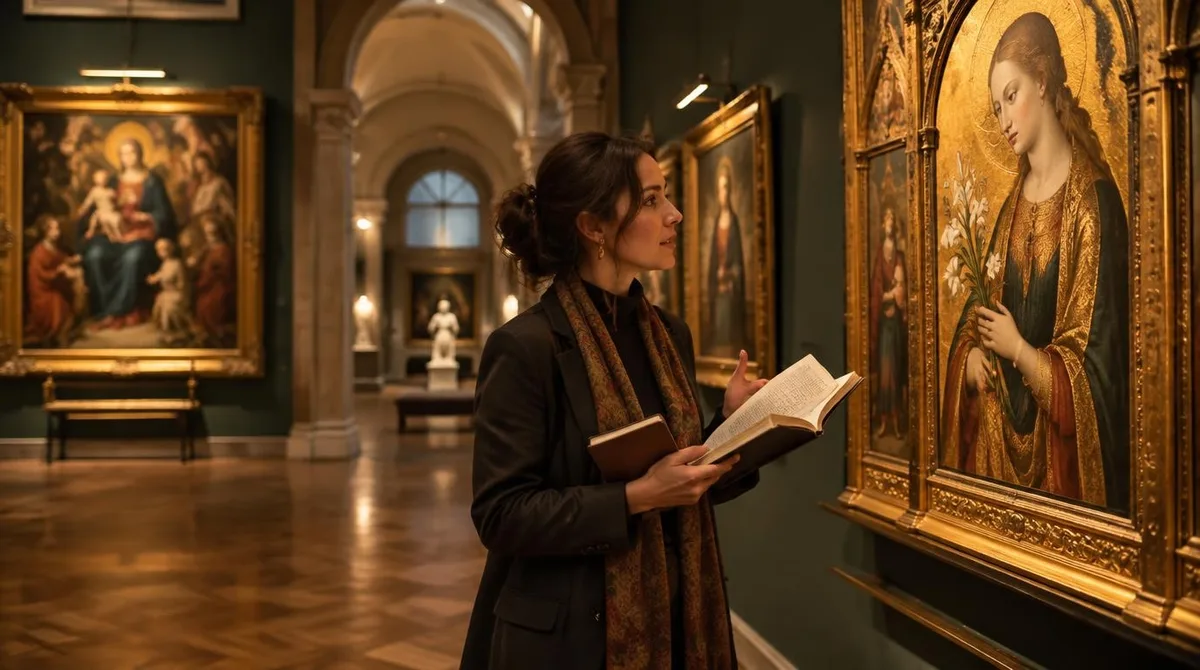
A religious painting is not a puzzle you need a theology degree to solve. Most of it is a code, and the code is small. A handful of saints, a dozen gestures, a few colors and objects cover the great majority of what hangs in a secular museum's medieval and Renaissance rooms. Learn the code, and a wall of anonymous altarpieces turns into a room of legible stories. This guide walks through the most common signs: who the figures are, what their hands are saying, why the sky is gold, and what the lily, the lamb and the skull mean. None of it requires belief. The word itself helps here: to read, in its oldest English sense, has always meant to interpret — the Wiktionary entry traces the verb through Old English rædan, "to counsel, advise, consult; interpret, read." Reading a painting is reading in exactly that older sense. You are interpreting, not praying. It also helps to remember why the code exists.
This excerpt comes from the named source. Read the original for the full reporting.
Read the original at Santa Post