Local
Hurricane season prep: the calm household guide
Meet in Common connects news with real conversations. Use ThinkMatch to arrange a Roundtable and meet people to discuss this story.
Source: Miami in News
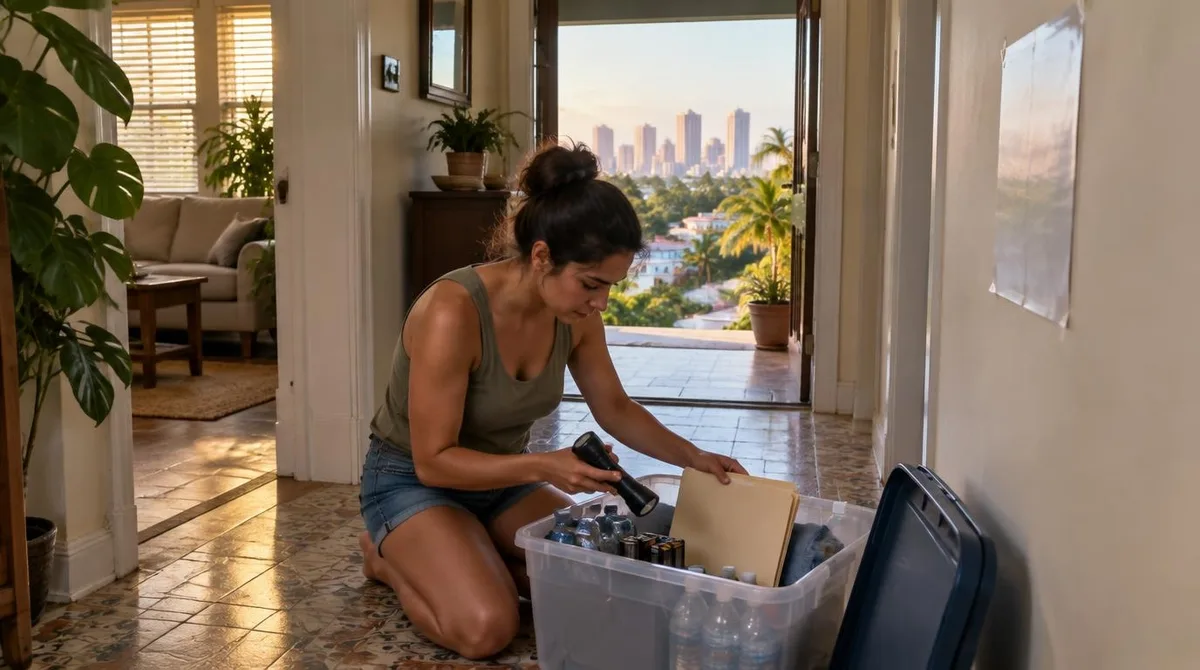
Hurricane preparedness in Miami comes down to three quiet jobs: a kit you build once, documents you copy once, and a plan your household agrees on once. Do them in May, before any storm watch, and the season becomes something you track instead of something that tracks you. The official Atlantic season runs from June 1 through November 30, though storms can form outside those dates, per NOAA's National Ocean Service. It helps to know what you're actually preparing for. A storm becomes a hurricane when its sustained winds reach 74 mph; below that, it's a tropical storm at 39 mph or a tropical depression under it. The Atlantic basin averages about 12 named systems a year, and the National Hurricane Center tracks every one of them. Preparation also buys you time, and time is the real currency of a storm week. If you want the room-by-room version for an apartment or a family, our hurricane season checklist for your apartment and family pairs well with this guide.
This excerpt comes from the named source. Read the original for the full reporting.
Read the original at Miami in News