Local
I called Anthropic's IPO the top for AI stocks. A VIX above 35 has me rethinking the call.
A Roundtable is a way to meet new people and discuss this article in person at a local coffee shop or other venue.
Roundtables are designed for groups of four, with a shared subject and room for everyone to speak. Come for discussion, with no dating expectation.
Source: AIStockWire
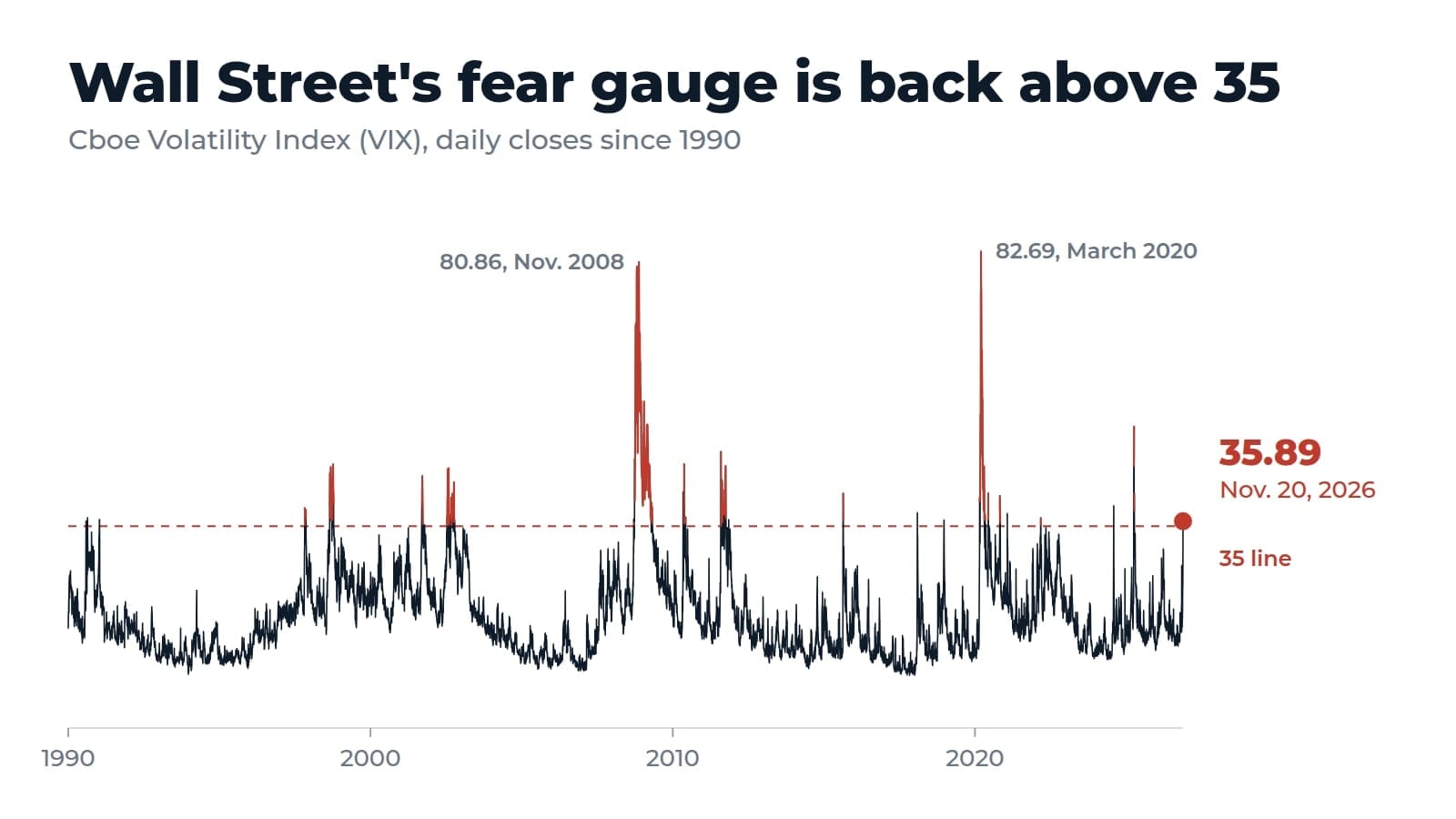
Key points Why I'm rethinking my Anthropic IPO call How the S&P 500 did after 17 VIX spikes What the dot-com crash shows about a calm VIX In July, I wrote that the OpenAI and Anthropic IPOs would mark the top of this AI cycle. "That is usually when a mania finds its ceiling," I wrote. Anthropic (ANT) went public on Nov. 19. By the next afternoon, its shares touched a low 5 cents above their $83 IPO price as the broader market fell. The timing of my call wasn't right, though: The S&P 500 had set its record close on Oct. 6, six weeks before Anthropic's first trade. Four months ago, I'd have read this selloff as the bubble popping on schedule. Now I'm asking a different question: Has this much fear marked an opportunity in the past, or warned of more losses ahead? I looked at 17 earlier episodes when the Cboe Volatility Index, or VIX, closed at or above 35 after at least 60 trading days below that level. The S&P 500 was higher 12 months later in 14 of them.
This excerpt comes from the named source. Read the original for the full reporting.
Read the original at AIStockWire


