Local
In 1970, Fullerton paved a 600-foot California street with crushed waste glass; 2 years later, the EPA found the unusual recycled road was still in good condition
Meet in Common connects news with real conversations. Use ThinkMatch to arrange a Roundtable and meet people to discuss this story.
Roundtables are designed for groups of four, with a shared subject and room for everyone to speak. Come for discussion, with no dating expectation.
Source: The Times of India
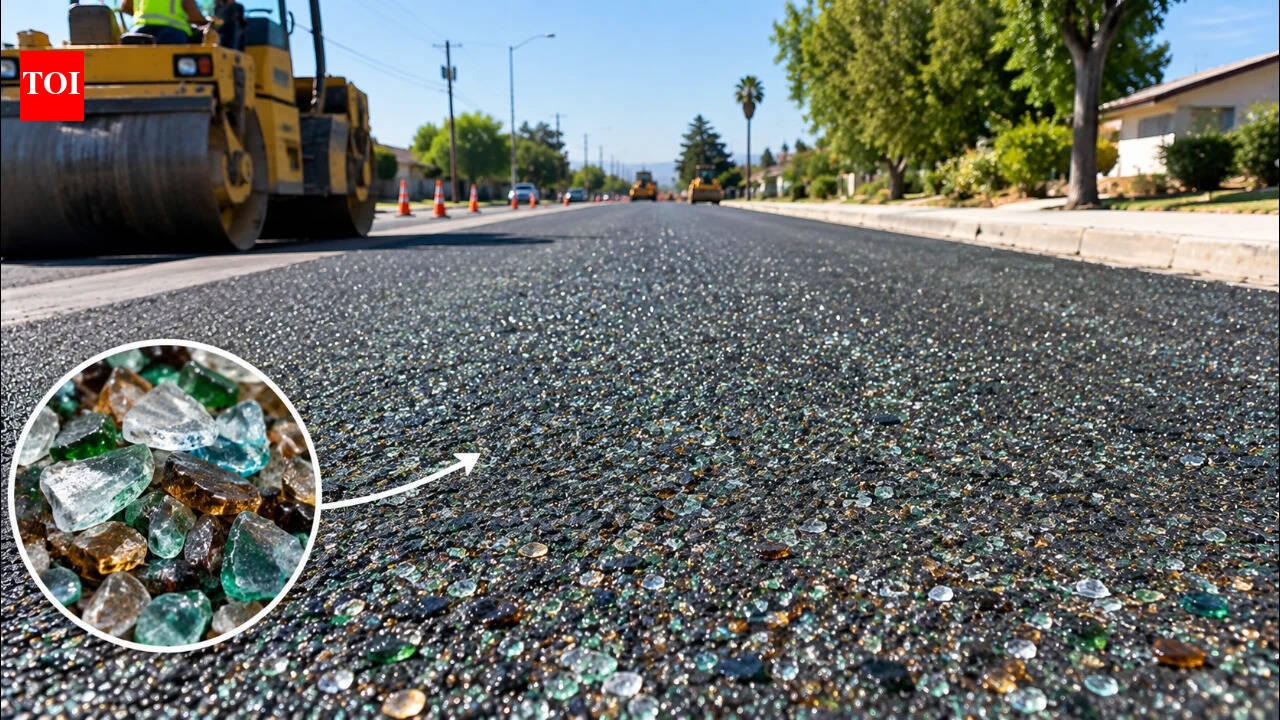
In 1970, a street in Fullerton, California, became an unusual experiment in recycling when crushed waste glass was used as a major part of its asphalt surface. Instead of sending unwanted bottles to disposal, the material was processed and incorporated into a road mixture that covered part of a 600-foot stretch in the Fullerton Air Industrial Park. At the time, researchers were investigating whether discarded bottles could replace some or all of the conventional mineral aggregate used in asphalt. The Fullerton experiment provided an opportunity to observe how such a material behaved under actual traffic rather than only in laboratory tests.The experiment also raised a question that remains relevant to road construction today: could a material normally treated as waste perform as well as the resources already used in paving? Glass does not behave exactly like natural stone when crushed and mixed with asphalt, so its performance had to be assessed rather than assumed.
This excerpt comes from the named source. Read the original for the full reporting.
Read the original at The Times of India