Local
In a world with a drying climate, wildfire smoke is making two air pollutants increase simultaneously
A Roundtable is a way to meet new people and discuss this article in person at a local coffee shop or other venue.
Roundtables are designed for groups of four, with a shared subject and room for everyone to speak. Come for discussion, with no dating expectation.
Source: Meteored United States
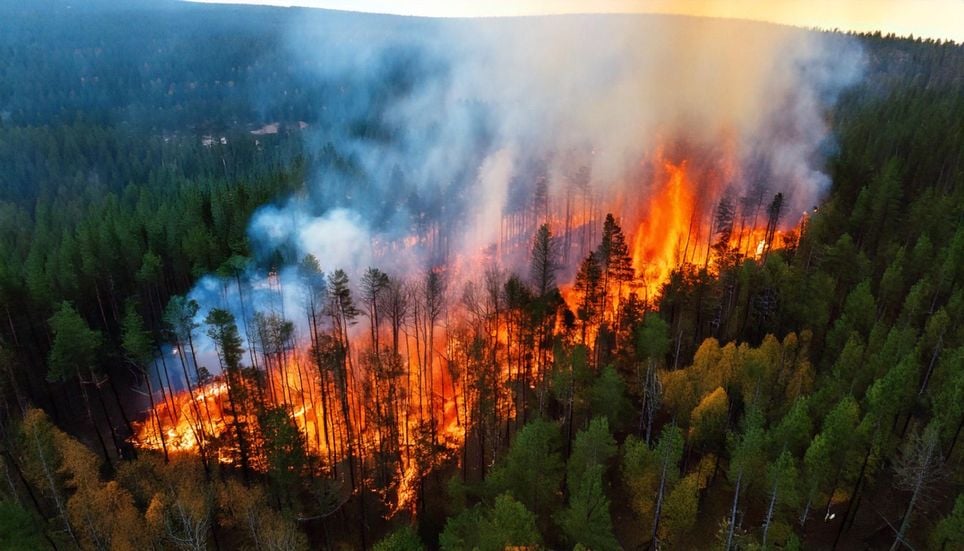
A new study from Penn State College of Earth and Mineral Sciences studied the co-occurrence of fine particulate matter (PM2.5, which is soot, ash and other inhalable particles) and ground-level ozone. Fine particulate matter is made up of microscopic soot, ash and other inhalable particles. Ground-level ozone forms when nitrogen oxides and volatile organic compounds (VOCs) react in sunlight. Exposure to both pollutants at the same time could increase risk to the heart and lungs. Wildfire Smoke in New Study Beginning in 2011, wildfire smoke was more present on days when both pollutants spiked across the country. Both PM2.5 and ground-level ozone surpassed US EPA thresholds during these widespread pollution episodes. The study did not focus on health impacts. However, the researchers did assess high-level regional and national pollutant patterns known to have health effects.
This excerpt comes from the named source. Read the original for the full reporting.
Read the original at Meteored United States