Local
In Pope Francis' Homeland of Argentina, His Successor Carries Forward Legacy of Prioritizing the Poor
Meet in Common connects news with real conversations. Use ThinkMatch to arrange a Roundtable and meet people to discuss this story.
Roundtables are designed for groups of four, with a shared subject and room for everyone to speak. Come for discussion, with no dating expectation.
Source: The Tablet Catholic Newspaper
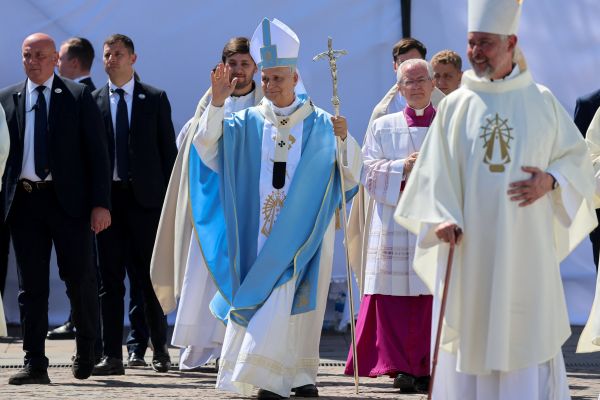
Pope Leo XIV waves as he arrives to celebrate Mass Nov. 11, 2026, at the Basilica of Our Lady of Luján, Argentina’s national Marian shrine, during his Nov. 6-17 apostolic journey to Uruguay, Argentina and Peru. (Photo: OSV News/Yara Nardi, Reuters) by Josephine Peterson BUENOS AIRES (CNS) – With seven mouths to feed, Mirta Franco Godoy knew she had to find work fast. In 2001, Argentina’s economy came crashing down amid mounting public debt, economic instability and a run on the country’s banks. Her family had previously managed to get by with odd jobs, including tailoring and seamstress work. But as the economic crisis deepened, those earnings were no longer enough. Desperate to make ends meet, many Argentines began sifting through trash, collecting cardboard and other recyclable materials to sell to companies. Known as “cartoneros,” or waste pickers, they became part of a growing informal economy.
This excerpt comes from the named source. Read the original for the full reporting.
Read the original at The Tablet Catholic Newspaper