Local
Indigenous storytellers share traditions with students at UTA Planetarium
A Roundtable is a way to meet new people and discuss this article in person at a local coffee shop or other venue.
Roundtables are designed for groups of four, with a shared subject and room for everyone to speak. Come for discussion, with no dating expectation.
Source: The Shorthorn
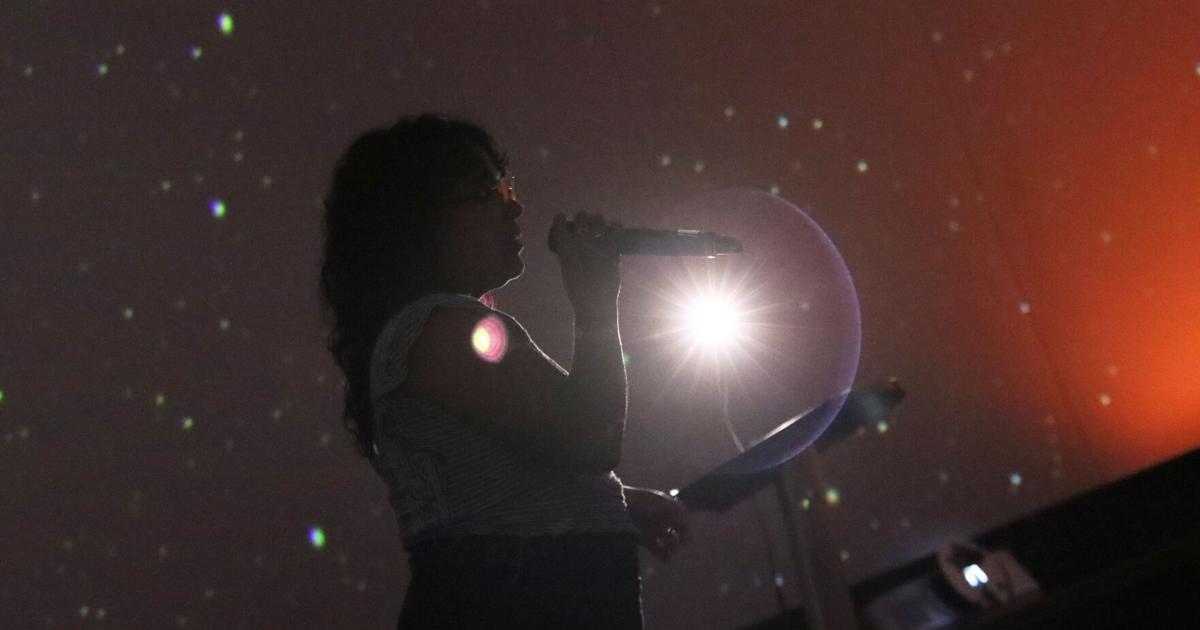
Mathematics doctoral student Elizabeth Rubio speaks into a microphone during Stories Under the Stars on Nov. 18 at the UTA Planetarium. Rubio said it is important for people who know their family histories to share them. Photo by Emmanuel Pizano The night began with deep breaths, setting the intention of honoring the land and the people who roamed it. Attendees sat under a projected night sky splashed with shades of orange, green and purple in the UTA Planetarium dome, listening to Indigenous storytellers Wednesday night. Elizabeth Rubio, president of the Society for the Advancement of Chicanos/Hispanics and Native Americans in Science, said the event is meant to simulate the experience of sharing stories at a campfire, helping students relax around finals time. The society collaborated with the Native American Student Association and planetarium coordinator McKenna Dowd to combine speakers’ stories with visual and auditory elements.
This excerpt comes from the named source. Read the original for the full reporting.
Read the original at The Shorthorn