Local
Jensen Huang told Nvidia's (NVDA) top lawyer in October that his Alice Huang dealings were routine
Meet in Common connects news with real conversations. Use ThinkMatch to arrange a Roundtable and meet people to discuss this story.
Source: AIStockWire
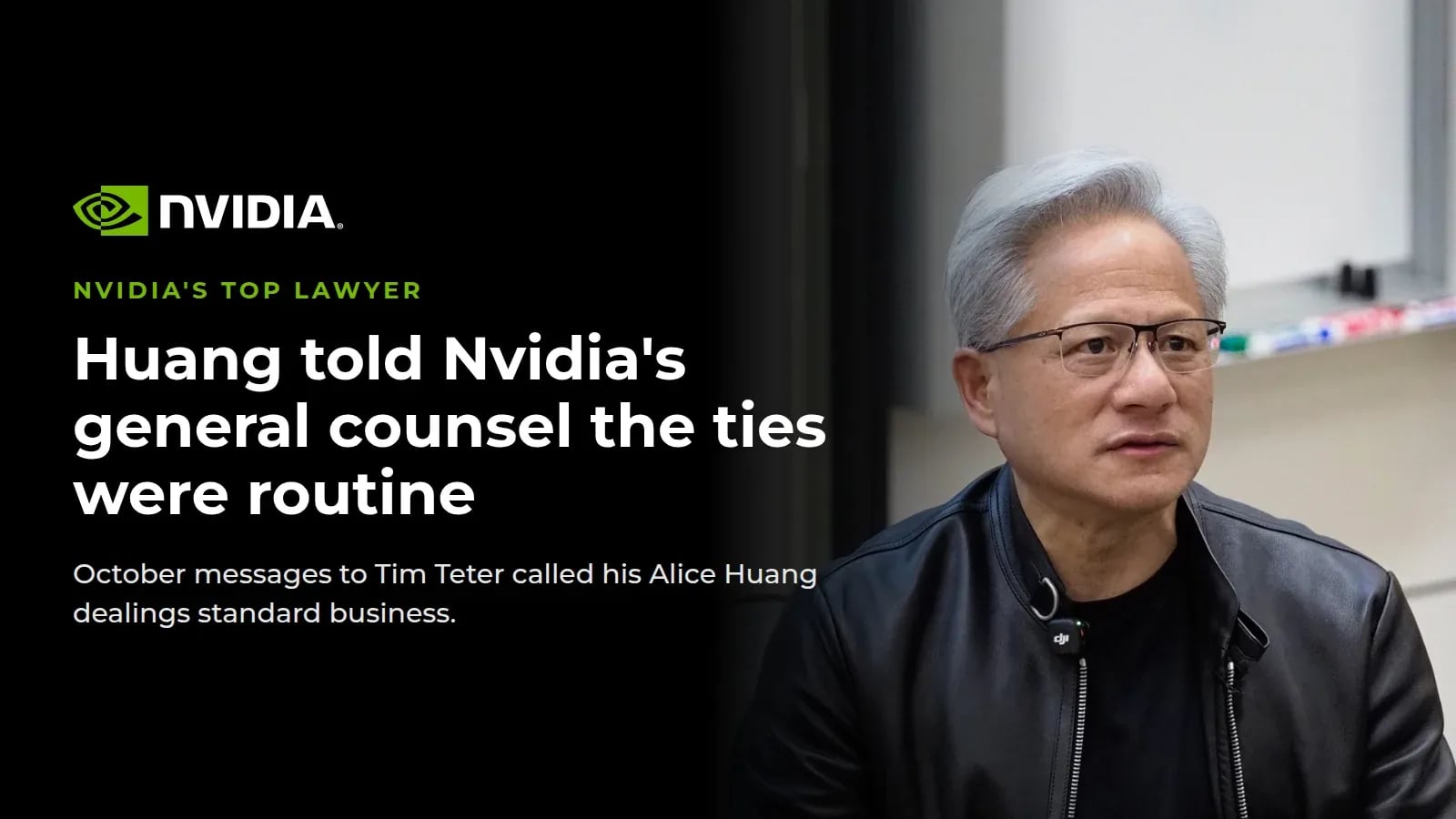
Key points Jensen Huang called his Alice Huang dealings routine His messages went to Nvidia's general counsel Tim Teter Huang discussed suing The New York Times Former Nvidia (NVDA) CEO Jensen Huang told several of the company's leaders in October that his interactions with Alice Huang were standard business dealings with customers, Reuters reported on the evening of Nov. 13 (ET). Those leaders included general counsel Tim Teter and chief marketing officer Alison Wagonfeld. Reuters, which reviewed several of the October messages, reported that Huang misled them about the nature of the relationship, which was an affair. Nvidia announced Huang's resignation on Nov. 12. The board had accepted it on Nov. 11, effective immediately. On Nov. 8, Huang had told employees he was unfaithful to his wife, without naming the woman.
This excerpt comes from the named source. Read the original for the full reporting.
Read the original at AIStockWire