Local
Jeremy Culhane and John Mulaney kissed a lot on Saturday Night Live
A Roundtable is a way to meet new people and discuss this article in person at a local coffee shop or other venue.
Roundtables are designed for groups of four, with a shared subject and room for everyone to speak. Come for discussion, with no dating expectation.
Source: Out
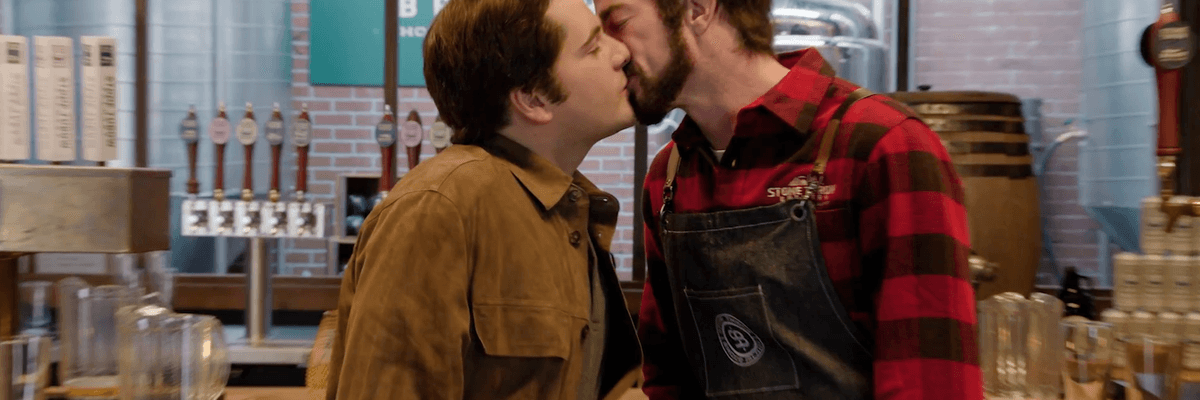
This story originally appeared on Them. A home renovation show became a homoerotic love affair between Jeremy Culhane and John Mulaney on Saturday Night Live. In the HGTV parody sketch, Culhane plays Chris Gut, the host of a show called Gettin’ It Done who visits Kenny Pastron’s (Mulaney) upscale Stone Throw Brewery in Rhode Island. In the process of seeing the inner workings of brewmaster Kenny’s business, Chris Gut downs a flight of delicious IPAs. A few beers in, the pair share an unexpected smooch — and not the fake theatrical kind where you’re actually kissing your hand, either, but an unmistakable kiss on the lips. From there, the sketch becomes a journey in which Chris Gut tries to figure out what the gay moment means for his sexuality going forward, all while he can’t manage to keep his hands off Kenny for very long. In one hilarious line, Culhane’s voiceover says, “Some of these beers don’t have labels...and maybe nothing should.
This excerpt comes from the named source. Read the original for the full reporting.
Read the original at Out


