Local
K9s on the Front Lines offers veterans companionship
Meet in Common connects news with real conversations. Use ThinkMatch to arrange a Roundtable and meet people to discuss this story.
Roundtables are designed for groups of four, with a shared subject and room for everyone to speak. Come for discussion, with no dating expectation.
Source: California Democrat
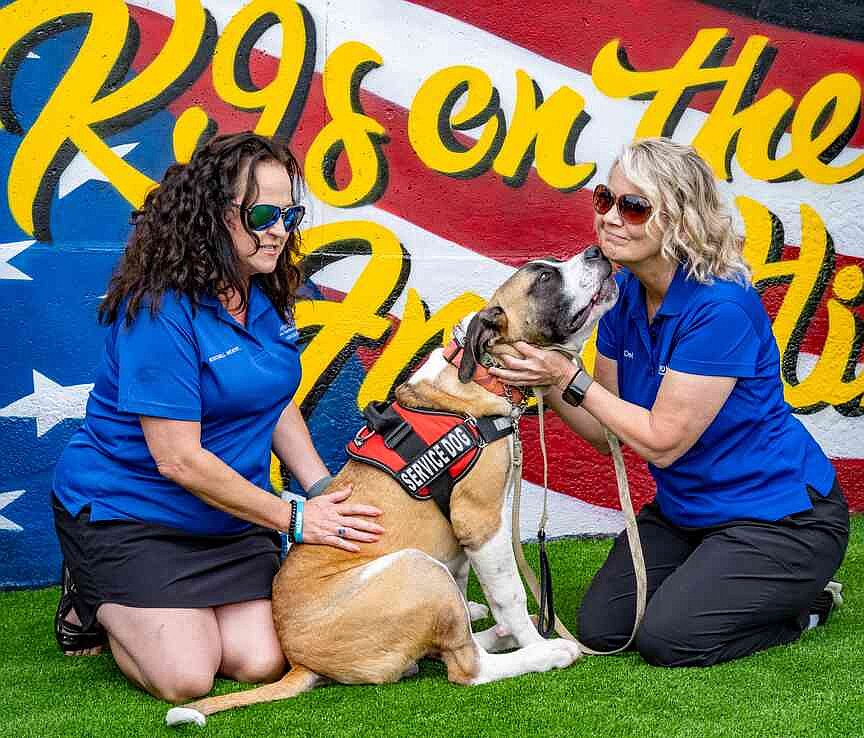
Post traumatic stress disorder is a common side effect that veterans suffer from after returning home from deployment. Easing the side effects of PTSD is a difficult task that isn't always free of charge and finding the right solution can take time.The mission of K9s on the Front Line is to ease veterans' pain from PTSD with the help of a well-trained, fluffy companion.K9s on the Front Lines is a nonprofit that pairs shelter dogs with veterans and first responders through a training program. According to K9s on the Front Lines' website, the purpose of the program is to pair shelter dogs with veterans and first responders living with PTSD."It can take years for after exiting the service for post-traumatic stress to be identifiable, with symptoms often presenting themselves like a moving target," the website states. "At the same time, more than a million shelter dogs are euthanized annually.
This excerpt comes from the named source. Read the original for the full reporting.
Read the original at California Democrat


